The dam removal movement is in full swing, and it’s about to get bigger. In 2021 the 4 Klamath River mainstream Dams will come down, and this will be a new high eclipsing the Elwah project, which while significant, and satisfying, and beautiful, and moving, let’s admit it, is a minor river ( 1,507 avg discharge to Straight of San Juan De Fuca off the Pacific Ocean) compared to the Klamath, which at 17,300 CFS at it’s mouth on the Pacific makes it the 45th biggest river by flow in the USA. If the Klamath goes well, the next bullseye seems to be on the Lower Snake River for a mass project, as a means of saving the suffering and genetically stifled salmon runs that used to be the greatest in the world, from the Colombia Basin. According to American rivers:
American Rivers does a great job of tracking all this, but they didn’t ever do a chart of the Total Annual Removals until I had done one.. I want to release this one independent of any article:
Total since 1999:1025
total since 1912:1578
Dam’s removed prior to 1999: 553 dams
Average Annual Removals from 1912 to 1998: 6.4 dams per year
There must be a thousand rivers like the Cuyahoga in America, and ten thousand around the world.. it runs only 84 miles, only drops 500 feet, drains only 809 miles of America’s 3 million. On top of that it drains in the ignominious City of Cleveland, which Eddie Murphy implied many years ago in Beverly Hills Cop was not much of a place for classy execution, well before I ever got to see it with my own eyes and give it a personal judgment of coming back but hardly Paris. Never been off the highway in Akron, but they did produce LeBron. The River Cuyahoga might be able to flow a half million CFM into Lake Erie, and it’s got a reputation for some pretty scenery and ledges in it’s upper reaches, so impressive they were made a National Park, but it’s hardly a world class waterway. What made if famous beyond Ohio was this:
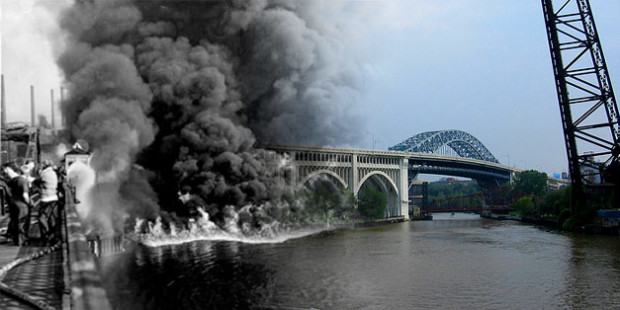
This is a picture of the Cuyahoga someplace I am pretty sure in Cleveland, on fire in 1952. It caught on fire some 13 times between 1868 and 1969 it is reported, about every 7 years it sounds like, and who knows how many minor fires were snuffed out that didn’t make the broadsheets.
The Cuyahoga wasn’t famous for this:
it was famous for this:
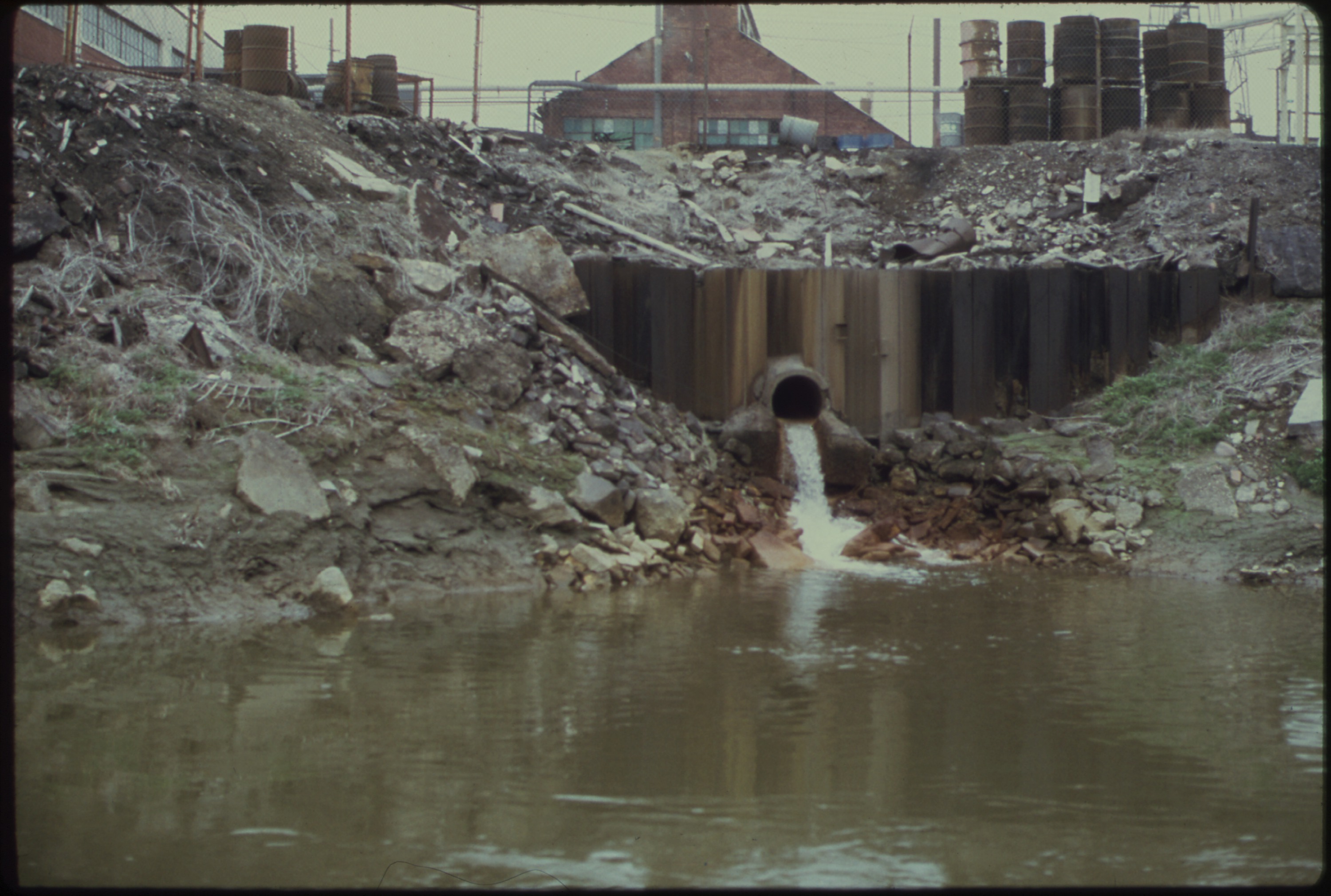
and this: it was biologically dead from Akron to Cleveland, some 50 river miles, toxic and anaerobic, unable to support life, and more a gutter than a river as it ran between these two famous industrial cities, dredged for navigation, dammed some 9 times a sluice for pollution going out and raw materials coming in, looking like this: but even that didn’t make it famous, that wasn’t an uncommon sight in America either back then, as rivers from the Delaware, to the Hood Canal, to the LA River became sad reflections of themselves, sooty industrial monstrosities.. that was about every urban river in America and a few rural ones to boot in places like coal country. What made it special was catching on fire some 13 times ( how the F@#$ does water catch on fire!?), and finally that picture above of the fire making it into Time Magazine in 1969 ( August 1, 1969 America’s Sewage System and the Price of Optimism), right when America’s optimism for the moon landing made it particularly embarrassing how shabby we had let things become. We had perspective now, we had photographed the world from above, and to quote the famous adage, if we can out a man on the moon, why the heck can’t we fix a problem like this!
The fire and the Time article some 48 years ago have been commemorated many times, having helped launch Earth Day and mass adaptation of environmental values that were channeled by Richard Nixon into some very important pieces of legislation including the Clean Water Act.. that was the nadir, nationally even, and now things are perfect nationwide. Done and done, right? Well, not really, because the Clean Water Act focuses on pollution, and pollution was only the most obvious problem back then.. frikin’ river catches on fire, and people got some explainin’ to do, right Tommy Boy, but think about it, pollution is only part of the problem, but the only part the Clean Water Act had a real mission to solve in 1972 when it passed, most publicly as a result of this event. Sure the Cuyahoga still has pollution issues, it runs through two major cities Akron and Cleveland. Impervious surfaces, sewage, automotive and industrial run off are just a few to mention almost anyplace people live near water, and where you find water, you almost always find man. While we have controlled the old boogie men of industrial waste and pollution, we came up with more nuanced bad guys like the aforementioned, contamination not just from major big bad factories, which they call major point source pollution, but leaky car oil pans and radiators and fecal matter from walked pets are the potent but somehow less menacing and horrifying new bad guys; fix a big problem and move onto the next one down the list, and that is what makes what is happening on the Cuyahoga so impressive, because they are moving down the list well past where anyone might expect for a river that had so many problems, nor resting on their laurels. They have blown past storm water runoff and are now taking on derelict dams! Them kids at Patagonia just told the Starbucks set that dam’s were bad three years ago, but them Trump voting hard heads in Ohio have been ripping out dam’s for more than ten! What am I talking about? We’ve come a long way baby.. enter again one of my favorite new themes, dam removal, stage right. Why I became curious to research this is I was poking around looking at data from American Rivers for a previous post on Dam Removal going Prime Time, and I kept noticing a particular river on the lists of the 60 or so dam’s removed every year. it wasn’t high profile projects like the Klamath or the Penobscott, where Endangered Species Act and blue state political inertia is making things happen, it was a river in Ohio with a familiar name. For one river this small, no matter what the reputation or location, to have 5 dam’s removed or diverted in the last 15 years with at least one if not two more in planning might be a record, per river mile or by any measurement. To have this happen in the perennially environmentally distracted heartland is almost astounding. And the to such a iconic river. What was happening on the Cuyahoga? I had to ask myself.. a whole lot it seems, in the right direction after a whole lot of industrial might made it such a laughing stock.
Cuyahoga River Dam Status
Upriver to Downriver:
1. Lake Rockwell Dam no plans.. upriver of Akron, and provides the city with it’s drinking water
2. Kent Dam removed 2004 Kent 3. Munroe Falls Dam Removed 2006
6. Gorge Dam ( AKA First Energy) removal 2019 ( waiting for funding) Akron 7. Brecksville Dam State moving to remove it in 2017 or 2018
multiple tributary dam’s have been removed as well.
What’s powerful about this from a narrative perspective is that there are large water falls behind the Gorge Dam, just yards behind it. If it is removed, they will be restored in some form!
If that dam is taken down, there will be something like 60 miles essentially wild flowing river running from Lake Rockwell Dam all the way down to Lake Erie.. this would be a huge benefit to the Lake, which is experiencing horrible algae blooms in part due to the increased water temperatures that come with stagnant waters. State Government and the EPA have so much momentum to fix this river to a bar set high for water quality scores that they seem to be heading towards a wild restoration, which no one would have dreamed of so long ago when the river was dead and on fire less than 50 years ago. It’s like going from Quadruple Bypass to Marathons.. turning Calcutta into Copenhagen ( if that’s progress…). Making William Hung actually sing and dance like Ricky Martin, it’s almost seems implausible. If you figure on the 30-80,000 dams nationwide that the greenies keep trumpeting about, there are very few free running stretches of anything, especially this close to population sources, industry, and agriculture and east of the Mississippi & Rockies, all situations that demanded river control in the old school tradition.
Mayor Carl and Cong.Lewis Stokes of Cleveland
What also impresses is that you have a state with a politically adept and not foolhardy Republican There might be a thread of inevitable progress here. Ohio is pretty far east.. it’s a place where people have made mistakes and had time to move away from them.. while the west stumbles into the reinvention of the wheel, perhaps Ohio is joining the east coast in acts of societal maturity, watching aging infrastructure through it’s decrepitness impose something different, and a place so long from it’s wild roots somehow recognizing intuitively what might change it’s moribund economic state, a return to a pre-industrial environmental state. While so may rivers in America languish without momentum fighting runoff, dam’s, diversion, and neglect, the Cuyahoga seems to be benefiting from how bad it got, but in some ways it isn’t.. It is benefiting from how bad it got that it might have contributed to laws and programs that fix the problem, but they weren’t intended for it. The US and Ohio might recognize the symbolic significance of this river but they don’t necessarily account for it’s momentum. If you talk to those involved as I was able to do a few busy months ago, they will tell you that the laws and efforts that are setting the Cuyahoga free as as much from the regular band of state employees and local activists as from any celebration. It all supposedly started with a pair of power brothers, the mayor of Cleveland and his brother a long serving US congressman Carl and Louis Stokes. When Carl became mayor a year before the ’69 fire he was on fire himself and talented to do what the city needed to recover from strife and decay brought along by so many things from pollution to racial issues to urban decay and steelbelt economic woes. He saw the river as a worthy way to turn the town around and his emphasis flowed not only up river but around the country. The Cuyahoga as the symbol of pollution became the focus of improvement, and guys like his brother pushed those ideas in Washington as well. A framework built locally but to the benefit of all.
Gov.John Kasich signing a bill to give ODNR more power in Lake Erie
Governor in John Kasich who hasn’t tried to strip or hamstring these efforts as happens out west, where water going anywhere but into a dam or onto a plant is argued as wasted by a cranky contingent of industrialists. While Ohio DNR might have cash flow issues like any well meaning state bureaucracy is bound to, it’s still doing it’s job, it hasn’t been politicized or stripped bare so much that Dam Removal projects couldn’t happen on his watch. Fish don’t know party, and clean water doesn’t only impact one side or the other, and it’s neat to see the wheels of government doing what they are supposed to in such a famously contested state. In the traditional narrative so espoused right now by partisans, African American Politicians aren’t known for prioritizing the environment no more than Republican Governors are. It appears that a cleaner Cuyahoga has become a shared value. And don’t forget the activists. Their work progresses, to the point of celebration, and is now moving through hurdles to an almost pristine state that barely any other river this size could imagine benefiting from east of the Mississippi, let alone west of it. This river, diminutive though it may be, runs through so many populations, rural and urban, left and right, green and rust colored, that it’s great to see it as a uniting force in a better life for all than a source of contention.. it’s about two visions of America experimented with and now redeemed.. industry exchanged for beauty as time and circumstances allow. From a fiery symbol of what was broken to now almost a model of the pristine. Something is working here other than the steel mill. What can I say.. Cleveland ( and Kent, and Akron) Rocks!
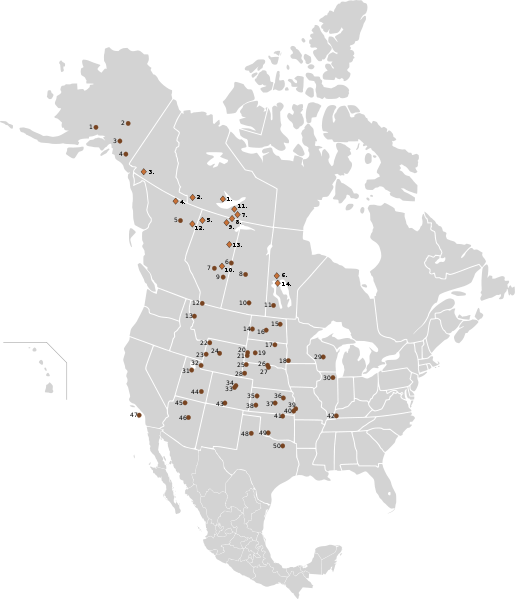
Over the last few months I have been perusing the internet to find examples to back my claim that there is a somewhat recent and growing phenomenon ( explained in part 1), which I hope keeps growing, of Native American/Indian Reservations using their autonomy to restore missing indigenous species to various habitat around the US. Natives Reintroducing Natives. This phenomenon happens most often west of the Mississippi River in what we know as the High Plains and West, but it’s not limited to there. The Upper Midwest seems to also have a thriving tribal ecology focus, and even the Eastern Cherokee, a little birdie whispered in my ear, are starting to take their tribal areas in Western North Carolina more seriously in terms of holistic management. There might be some elk running around soon. Here is an informal list of what I have found so far. If you want to learn more about any specific introduction effort, I would use the tribe and species as keywords for an internet search and I bet you find something: Note: I am trying to collect a list of reintroduction, but there are plenty more programs where there are habitat improvements for endangered, or locally extinct species that might not make the list. My scope might be too narrow, but I started a while ago when it seemed a fun challenge and this list would get really long if I listed every habitat improvement program, as much as I applaud them.
Bison Bison Bison: I covered the Bison as a case study in Part II. You can find the official lists of the Inter-tribal Buffalo Council there. There is currently great debate about what to do with a perceived overabundance of Bison in Yellowstone ( yes, despite Wolf Reintroduction) and many Reservations seem to have offered to take them to begin herds to keep them from being culled. Since these Yellowstone specimens are some of the last of the genetically pure buffalo ( without cattle inbreeding) it seems like a great way to absorb these amazing animals from this now annual winter massacre of sorts, management though it is somewhat convincingly argued to be. Here is an abbreviated list: Crow Taos Pueblo 1905 Pine Ridge and Cheyenne river in 1970’s Fort Belknap Nakota and A’aininin Reservation 600 head of which about 40 are Yellowstone genetically pure Fort Peck Assiniboine and Sioux (Montana) 45 in 2012 139 more in 2014 Lakota Sioux at Pine Ridge 45 head herd donated 2003-2008 in small numbers http://www.villageearth.org/global-affiliates/knife-chief-buffalo-nation-2 Southern Ute (Colorado) 30 head since early 80’s Unintah and Ooray Ute Reservation (Book Cliffs Utah) 480 head since 1986 more every few years https://wildlife.utah.gov/hunting/biggame/pdf/bison_10.pdf Even Though Washington State is considered outside the Original Range of Bison Bison: Yakama Nation (Washington) 12 in 1991 to 125 now Stillagaumish (Washington) 8 in 2008
Umatillas (Oregon) had them by an act of god but seem to have given them up in 2003. A Herd of Buffalo came onto their reservation from a neighbor who had fled to mexico to avoid some criminal charges it seems, but they were seen to be causing a ruckus so they were headed up!
Colombia Whitetail Deer: Cowlitz Tribe
Blackfooted Ferret: From a Population of 21 captured in Wyoming, the last remaining after they were thought to be extinct, the Blackfooted Ferret Numbers in the High Hundreds now. 300 are kept in captive breeding, centered in NE Colorado, and most of the rest are on Native Lands. http://indiancountrytodaymedianetwork.com/2013/08/23/tribes-pull-black-footed-ferrets-back-brink-150922 Fort Belknap Nakota and A’aininin Reservation (Montana) early 90’s Cheyenne River Sioux Reservation (South Dakota) 2000 Lower Brule Sioux (South Dakota) 2006 and 2007 Rosebud Sioux (South Dakota) Northern Cheyenne (Montana) Navajo Ranch (Arizona) Cui Ie Fish: Pyramid Lake Paiutes of Nevada
Elk: Fon Du Lac Reservation Wisconsin Ho Chunks have 27 want 400 Wisconsin Some tribes in the Northwest are getting more serious about habitat, expanding current populations with more care.
Sharp Tailed Grouse: Coeur’d Alene Tribe ID
Interior Least Terns: they nest along the Missouri River. Standing Rock Sioux
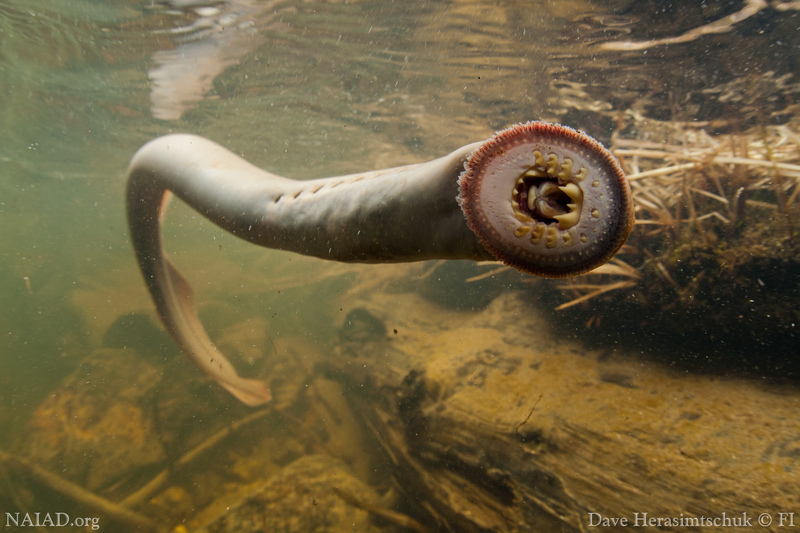
Pacific Lamprey: Wiyots of Northern California
Burrowing Owl: Upper Nicola Band BC CA
Piping Plover:
Prairie Dog: Cheyenne River Sioux Reservation Crow Creek Reservation
Churro Sheep: The Churro is not a native North American Species. It came from Spain with early Spanish Settlers, but over 400 years it had such an impact on the Navajo they want it back, and it’s hard to tell em not to! Navajo
River Sturgeon: Fon Du Lac Reservation Wisconsin Kootenai of Idaho
Lake Sturgeon: St Regis Mohawk Tribe
Trumpeter Swan: Flathead
Sprague Pippits:
Swift Fox: Blackfeet Indians of Montana Fort Peck Assinibone & Sioux of Montana Pine Ridge Sioux Turkey: Fort Peck Assinibone & Sioux of Montana
Grey Wolf: Nez Pierce of Idaho
There are a collection of plains species that all fell into radical decline with the spread of agriculture across the great planes, that collectively create an ecosystem that prey on prairie dogs. From what I gather, it’s prairie dogs, burrowing owls, and black footed ferrets that all seem to live in an ecosystem. It’s a hot topic in the Plains, through the Dakotas and Eastern Montana, and to detail all the work there is difficult, but there is a book about it! Prairie Dog Empire: Saga in the Shortgrass by Paul Johnsguard who details the myriad places these three species are being nurtured back to survival.. it’s on res’ and national lands, with a few private lands thrown in, and up into Canada for that matter. Prarrie Dog Empire on Amazon
Did I miss any tribes, species, or efforts? leave me a comment!
When you are the source of a superlative comparison, it’s fair to say you know what you are doing, and it’s always amazing to watch people who are the best in the world at anything do what they do. What is the comparison I am speaking of?
One Drinks like a Sailor
Now that I have had the pleasure of plying Shekou with the crew of the Libra, a hip little corner of the Chinese megalopolis of Shenzen, the manufacturing hub of the modern Chinese Economic and Pollution Miracle, perched atop Hong Kong like Tijuana to San Diego, I will never take that comparison lightly again. Not only have I seen up close and personal what it’s like to see a Sailor drink, I also know what it’s like to haul one up a 5 story gangplank in such a state, and in some funny way, it was a pleasure.
My father was in the Navy during World War Two. He never saw combat, despite volunteering at 17 years old for the Navy only 2 months after Pearl Harbor, since he tested well for intelligence (still a wonder to all who knew him) and they sent him to learn engineering for the length of the war, but he did see sea duty around the pacific mopping up after the war as he described it, including years in the reserves doing his two weeks. He never had he distrustful edge of a cagey veteran, but he knew how to drink like a sailor. My curiosity about my father’s experience gave me an obsession with the Henry Fonda movie Mr. Roberts, a film about a supply ship stuck sequestrated from the war delivering to backwaters with a martinet captain played by James Cagney who keeps his crew from being able to recreate on shore for a whole year, and when they finally do they cut loose so wildly it becomes a night of legend and drama, for therein was a character played by Jack Lemmon named Ensign Pulver, and I knew he was the closest I was going to get to knowing what my dad was really like as a pipsqueak 109 pound 5’9″ ensign in 1945.
We all have curiosity about our fathers, and dreams of experiencing their glories, and that night in Shekou, just outside Chiwan Harbor where Deng Xaipeng opened China to the west after the travesties of the Cultural Revolution, I think I got a taste of his, and it tasted hilarious.
I had bought a copy of Mr. Roberts before my departure, and watched in enroute. About a week after I watched it, I started to feel like I was living it, as run arounds by Chinese port and customs officials kept me from going ashore in Xiamen, and only with great effort at Fuqin, and only under guard at Nahodka in the Russian Far East. I was enjoying boat life but it was hard to not be curious about these towns we visited, which in the case of Xiamin was a 10 million person monstrosity I had never heard of with a nearby whorehouse that the Filipino’s raved about, not that that was my plan, but it was starting to wear on me. The ship was plenty big, but it felt like incompetence, corruption, and xenophobia were keeping me in a big floating steel prison that night, and I wanted off. The crew caught wind of it, and told me something interesting. The captain himself said not to worry about it, the Chinese up here were just mad with ambition.. save shore time for southern China where they know commerce, have a taste of freedom, and know how to be polite. Our next stop was Chiwan Harbor, the site of the first trade with the west after the Culural Revolution, on the Pearl River delta where trade had china had been pried open 100 years before by the Portugese and English, and just a stone’s throw from Hong Kong. It will be worth the wait he said.. these people were like mad Ant’s.. curious perhaps, but not fun.
So I bided my time as we plowed south through hundreds of fishing vessels, warmer and warmer weather and a growing sense of impending arrival. The Crew’s mood was lightening… we were approaching the Pearl River Delta, the famed entrance to Canton, and the approach to Chiwan, it’s latter-day companion in history. Whereas Canton handled Opium and goods coming into China, Chiwan was it’s revenge, post Maoist china selling addictive cheap goods to the world.
I woke up early to watch us glide into the port and settle into a modern container port yet with a wind of history about it. We had spotted Hong Kong to our right coming in, our subsequent stop, and you could feel a slightly free-er spirit in the air. The second the gangplank was down, a pair of merchants hustled up to sell us wares, far from the wary hostility of Xiamen and the indifference of Fuqin. They were in business for any and all things. a selection of cheap tactical looking flashlights and gadgets were thought to be in demand by the crew, but I focused in on pirated movies, and one in particular: Captain Phillips ( literally, a pirated movie!). I thought it would be fun to watch that on a ship of exactly the same purpose, albeit about 4 times the size of the Maersk Alabama which sustained the real attack depicted in the movie. I negotiated the price down as far as I could see being fair, and hustled up to my room to kill time as the cranes swung into operation.. it was hilarious to me to watch the cranes working in the beginning scenes of the movie as the cranes outside cast shadows on the glass of my laptop screen from my window facing forward and real ones doing the work of unloading our cargo from North America and northern China. It seemed an almost perfect place to watch the film.
Eventually it was evening, Captain Phillips was saved ( USA!!) and I could feel the energy draining from the operations outside and a sense of growing mirth inside.. it was time for us to go ashore as a crew, one I now felt some membership of.. I wasn’t “The American Passenger” anymore, I had become Mr. Thomas, someone who got the jokes, knew the drills and could be counted on to not screw up the fun.
I scrambled downstairs with just Yuan and my passport, looking for the Germans. We met and they were proudly done with their work, ready to finally go ashore. I was invited along, and the entrepreneurs at the top of the Gangplank quickly arranged a ride. He drove us to the gate, where we disembarked to walk through, passports in hand, past the wary but not threatening gaze of the guards, and back into the minibus for parts unknown.. there were karst mountains and a semblance of country, but quickly the trees faded to residential towers, dozens of them, and the western outskirts of Shenzen.. finally I was in China other than alone, my third now visit to the mad but fascinating place.
With the Chinese there is always a plan, and the plan of our hosts in the cab was obviously to make more from us than a cab fare.. always more more more! but it was genial.. we were brought to a nondescript building and persuaded to “go upstairs”.. it wasn’t a whorehouse or anything excessively tawdry, but a private sailors bar, with as much character as a 1980’s interior can have.. two funny wired up bartenders with a healthy dose of irreverence for a place like China beckoned us to drink.. there was grafitti all over the walls in black ink, names of sailors from who knows how many places in what felt almost like someones living room gone wrong.. bottles and offers were flying, but the Germans wanted to stretch their legs.. it wasn’t even close to dark.. Drinking has a time but this wasn’t quite yet.. while salty dogs, they were all used to departing from and returning to the north sea ports of their own nation with rare exception.. this was the first project like this they would execute, and they were quite happy to explore instead of imbibe for a time.. Food became the mission, but we were rangy, just wanted to walk, so we careened around, towers and electric mopeds and brand new subway stations and a combination of grime and glitz that is modern china.. we made it to a portion of Hong Kong Harbor where we could almost see across to the New Territories.. Towers lined the shore and regular buildings filled in behind..
traffic rules were suggestions to the delight of the Deutsche.. China China China!! First we saw a Senor Frogs.. I was horrified and delighted all at once.. Senor Frogs is the glaring symbol of gringoization, and tourist blight in Mexico.. here it was so out of context it was nothing but funny..We came across a school with 200 kids in a cement playground exercising in Unison to horrible speaker music, chanting what seemed like patriotic slogans..an apparently upscale school at that.. despite all architectural traces of the past being gone, it was still China China China! we finally stopped for a lunch in a place with sea creatures swimming in goldfish tanks outside..food down more walking.. above the scurrying crowd appeared familiar faces.. A pack of the Romanians!
We merged without too many words.. we were a crew, 4 nations represented but a crew, literally, and we had had plenty of time to familiarize.. we had so much to look at.. they must have taken the same white van, been deposited in the same place, and made the same decision to wander the unknown streets and right into us, in a busy and major intersection.. we wandered together for a bit, but the call went up, it was now time to Drink.. I found myself wandering back to that place, that bar where the informal Shuttle could meet us, as night was falling, and as tranquil as things seemed, well, as tranquil as China can seem in a busy urban area, it was time to seek sanctuary and attend to our second priority.. WE mounted the steps back to the Gratified secret domain of the Worldly Maritime Wanderers, the lair of sailor’s privilege, and who should we bump into but the Filipinos.. the last portion of our cohort.. curiosity for Asia was not as strong as lust for drink.. how strong could it be.. they too were Asian.. this was almost home, and money was to be spent wisely, on something quick and fun, and that was whiskey.. as I came up the stairs, shots were flying down, cheers being made, and we were greeted in the same way, as expected guests, not to be a distraction to the task but a partner in it. I sat and too it in.. the boys were at it.. the Filipinos who weren’t bible quoters had revealed themselves around the table.. those who didn’t want this were likely back at the boat monitoring for thieving longshoremen and alarming gauge readings.. the real adventurers were here.. I kept waiting for things to go to another level, for women to arrive or some line to be crossed, but China is a compliant place.. you go to the line, but it wasn’t crossed.. we were flirted with, but there was no chattel here, no drugs, nothing to sully the crews and blackball the place, only alcohol and good times.. shots, screaming and laughter.. relief to be on land.. for a few, this was departure after friendships as long as a Filipino’s contract, 8 months.. a few were going home.. it was a time of celebration and separation.. We were drinking like Sailors.. it was grand.
At some point it was related to me that I had to make it back to the ship..I had to go through customs, since I didn’t possess a Seaman’s book..Hong Kong was a mile away and a world away to the millions here.. again, San Diego to this Chinese Tijuana.. I was told it wasn’t urgent, but the time was now.. The Magician was deemed in bad shape and I was to accompany him home.. it wasn’t too late, maybe 10pm, but the customs house wasn’t there for my convenience, I was here at it’s discretion, and that China, the China of Beijing, with it’s more explicit rules, was waiting in the wings with it’s hook to reassert it’self..
The Magician and I boarded the Minibus.. I don’t think I quite realized how drunk he was.. we debussed to pass through, back in and glide to a 20 foot walk back to the gangplank, me and him.. I’m now carrying him in the traditional drunk buddy way, one arm over my shoulder and feet almost dragging, up the step and onto the platform at the bottom.. he’s like a fussy River Otter.. not nasty, just out of control with libation and joy.. he wrestles loose from me, I laugh and release him, and he does something that to me will always be the symbol of that night.. the well controlled company man by day, as were all the Filipinos, he in a second had his wiener out, and proceeded to piss all over the side of our monstrous boat.. he was screaming with his hands pumping up in the air.. drooling a bit onto his pressed collared shirt, and piss flying back and forth emanating from the fly of his Jeans.. He screamed something in a combination of English and either Tagalog or his Tribal Language that essentially said “take that you piece of shit boat! yeahhhhhhhhh!!!
The “Piece of Shit Boat” part was clear.. I laughed, almost bent over.. not even afraid of him despite his ranginess..He had been a friend since the first magic tricks were displayed for me at the Boat Bar B Q our second day out… his English was almost non existent, but his eyes had told me he possessed a soul that did ponder the deepest questions of existentialism.. whether he did I doubt will even know. the boat, despite possessing the same feminine soul all boats seem to have, responded mutely to his assault on it’s monolithic sides.. it seemed to frown and ignore him, Chinese style..I offered to help him up the gangplank but he was all energy now.. I held onto both sides for the 5 story walk up just in case I had to catch him with a body check, and while pausing and swaying, he made it up on his own almost in bounds of energy, spurts of reckless lunges towards his resented home..
When I reached the top the guys diverted me off to the office at the base of the superstructure.. all that mirth would drain as I joined a Captain and Crew Chief here for training for a late night trip to customs. a sad place of industrial carpets by a ferry terminal to Hong Kong for a light night stamping.. but I was content.. it had happened.. the toasts had been made, and the boat Christened! For now and forevermore.. I will feel like a sailor too..
Was this the last climb for a long time?.. before finding this youtube post from this year, the last climb of the Sierra I was able to find was in the 1980s..
Pretty neat.. looks like they came in Via Pueblo Bella from the south.. was this before the FARC moved in, before it was considered Sacred? I guess the worst fighting was later, so perhaps so.
This was posted by a guy named Alberto Molano, in honor of his friend Ricardo Ospina, who I am assuming was his partner on the climb.. he seems to be responding to questions in english and spanish if anyone has any..
Was this the last ascent of Colombia’s Highest Mountains.. 26 years ago?
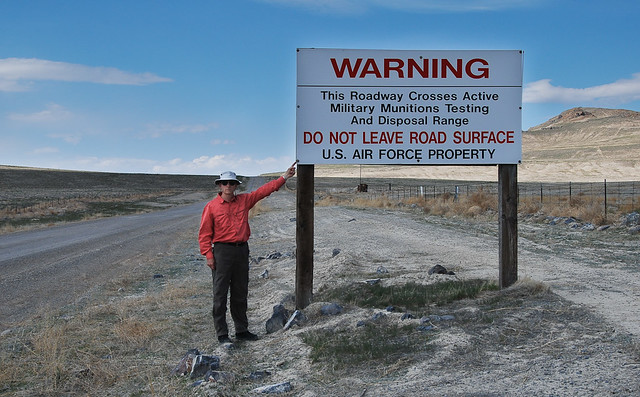
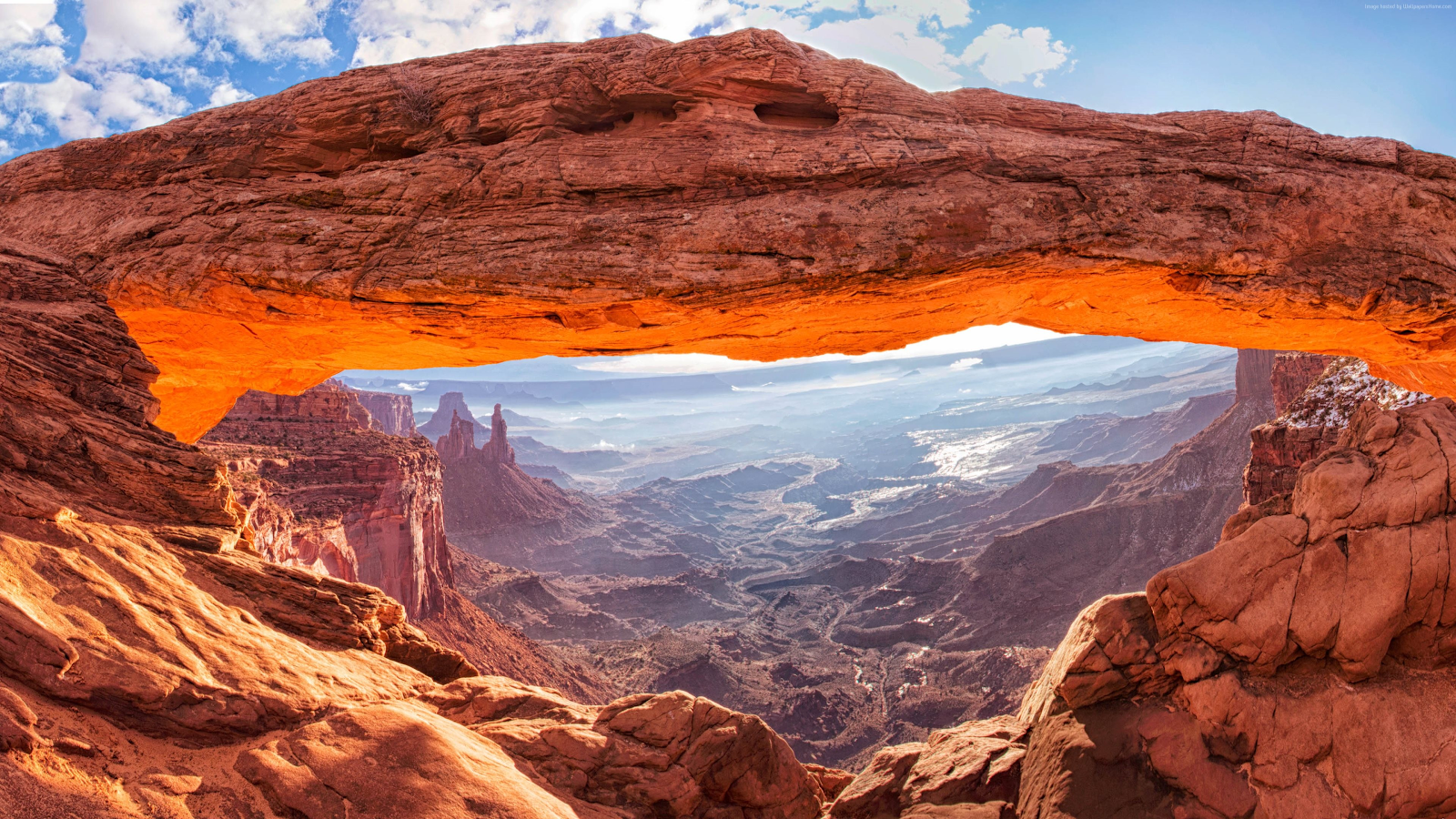
I’ve got a thing for Utah.. it’s wild, it’s serene, and it’s beautiful. Say what you want about Mormons, they run a tight ship and make great neighbors.. it’s a pretty good place. While I spend most of my time when I am there exploring the canyon’s of it’s southern reaches, one of American’s world class locations, I’ve been all over it, and one adventure took me over one of it’s rare and actually closed landmarks, in an RV with a crazy homeless dude no less. This is how I came to care about the topic of this blog, the bridge over the causeway that will hopefully contribute to the restoration of saline balance in this great body of water, the largest salt lake in the western hemisphere, and one of the most unique places in America.
People know the Great Salt Lake from the city named after it.. few actually see the lake proper.. you can spot it landing at SLC airport if there isn’t a layer of fog or a bad inversion, or see it’s edges from I-80 as you head to Nevada, past Bonneville, or maybe from the houses on the hills above the city that shares it’s name, but to the majority of the people of Utah, the lake is something you don’t think about much, it’s useless and somewhat in the way; Thus is the practicality of the Mormon pioneers. While Brigham Young said “this is the place”, this place had a big salt lake that wasn’t much use for farming or industry until brine shrimp and magnesium harvesting were figured out in this century.. but it was a nice barrier to moving further west, and the rivers that fed it fed their new civilization, which they eked out of Ute land and made into a successful civilization, territory, and then state of the great United States of America.
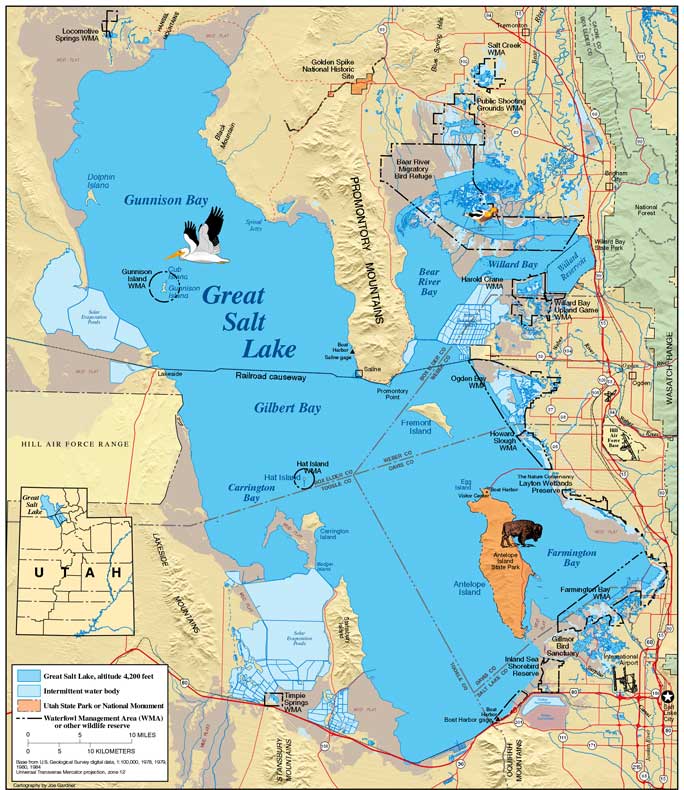
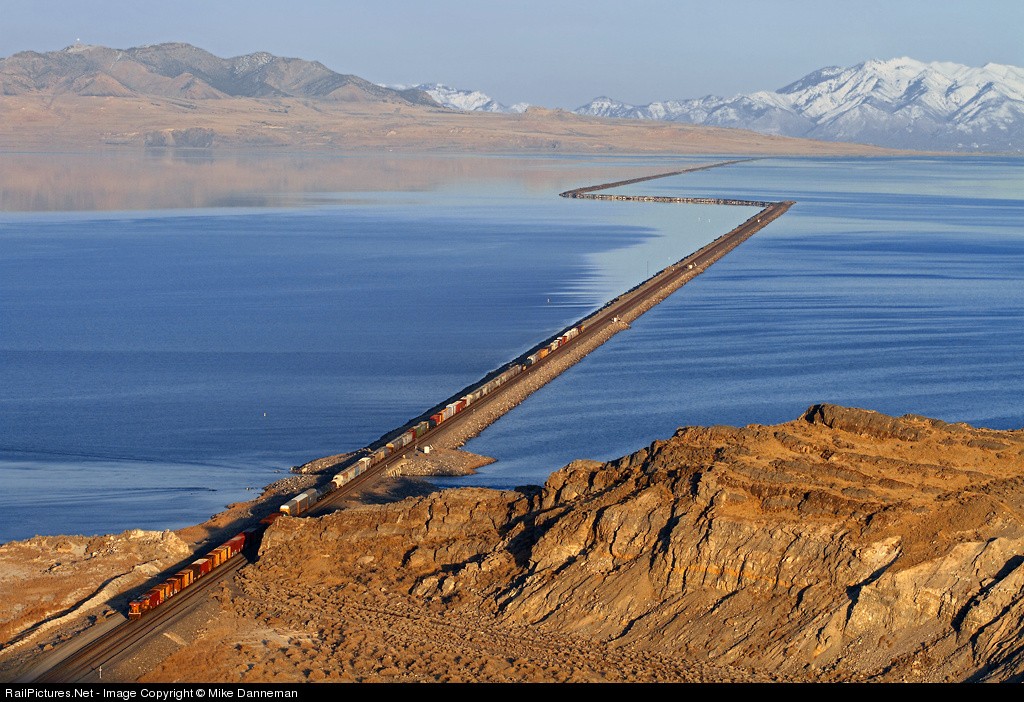
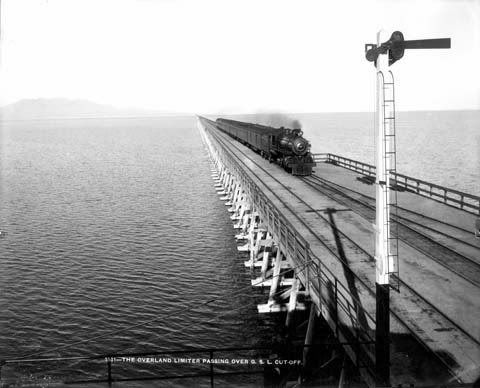
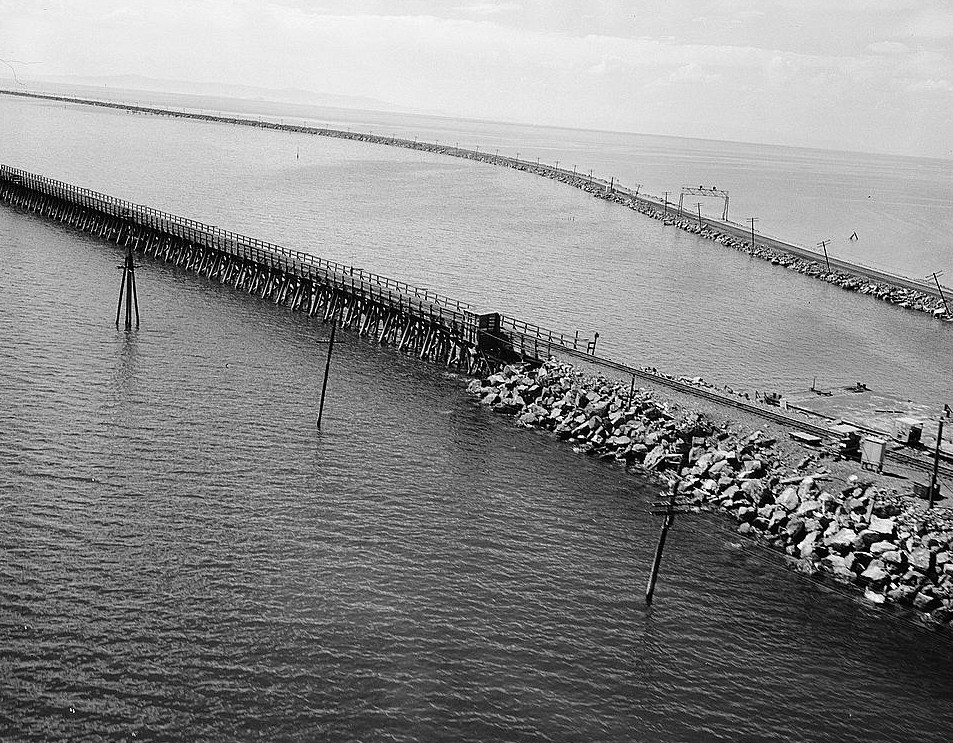
The lucky and the curious might head out to Antelope Island to take in the view and see the Buffalo, and the truly adventuresome might head out onto it’s waters to explore, or work, but I assume it requires frequent new paint jobs and a comfort with a silence hard to explain. Naivete led me to my greatest Salt Lake adventure. I was returning an RV from an adventure called Burning Man ( I showed up with skepticism but admit I saw something amazing there as well) and spotted a road to what looked like a marina on the west side of the lake on a DeLorme Gazetteere I purchased to widen my understanding of Utah, like I do in a lot of places.. if your map is a highway map, you only see the highways my thinking goes.. Blue Highways are for William Least Heat Moon.. I like dirt roads. I had left Burning Man a bit exhausted, and followed dirt roads east from it that I saw in my companion Nevada DeLorme Gazetteere, and it had been edifying, filling in amazing blank spots on the map north of the Humboldt River valley that most people know, again, the route of I-80-, past mines and abandoned homesteads, relics of the great drive west. When I returned to the highway with the plan of cutting through the Dugway Proving Ground to said marina, a place called Lakeside, I knew I had a few days left on my RV contract, and needed to clean the thing as well, so I figured my little turtle home, self contained in all aspects, was just right for this exploration. I would sit a few days, relax, ponder the lake and the desert, maybe meet some funky people and clean the dust out of the rig. Also as I returned to the highway, I picked up a rider, what seemed to be an old hippie, and we conversed somewhat easily at first, even though there were some warning signs, a refusal to drink water or eat food, and as time went on it got a bit weird, but I’ll get to that.. so I picked this guy up, and he seemed up for anything, told me he had no plan somewhere in north east Nevada,, so I turned north a few hours later, west of the lake, and started heading north through the desert to this alleged Marina.. it was right near what the map said was a railroad causeway, and it was one I had read about before.. the Great Golden Spike on the Transcontinental Railroad was driven in just north of Promontory Point, connecting east and west by railway, some 80 years before we would successfully do it with the Eisenhower interstate system for the automobile. Originally the railroad went around the lake to the north, but engineers and railroad barons like a nice straight line, and they constructed the railway across the lake, well two spans, touching at Promontory Point, called the Lucin Cutoff, and between 1902 and 1904 constructed it across the lake as a trellis. The nice thing about a trellis is that water moves under it no problem. it’s just a collection of pilings.. if anything, the strip of railroad cools the lake just a bit with it’s shade and stops it from evaporating away too fast, but progress is progress, and in the 50’s, our restless and now quite capable nation of eager beavers did what it did so many times, in the Everglades, on the Colorado, all over, and it built a causeway out of rip rapp and the natural circulation of the lake was halted.. there were a few culverts, but they started to sink under the weight of the train and were closed. The great Salt Lake became two lakes, separated by one great railway, and problems began to occur.
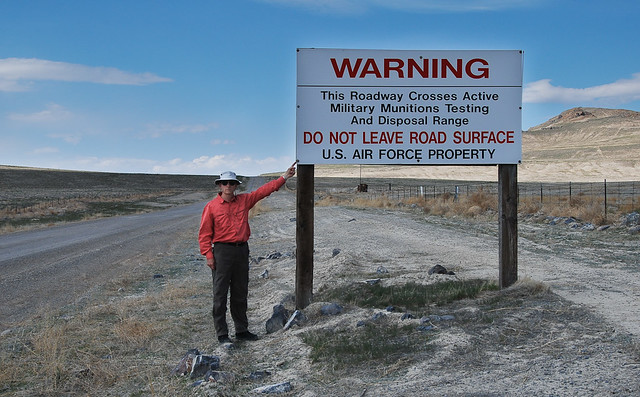
As I arrived at the gate of Dugway, my rootless companion, already coming across as a bit odd, expected from a 60 year old hitchhiker, started to act a little weird.. the only radio station I could get out there was broadcasting Sean Hannity. I am nervous because I know Dugway is a place for Secret Squirrel Stuff, but my map seems to indicate I can drive right through the place to the north end of it where my marina should be. Sure enough, the road goes to the right past the gate and keeps going.. no need to explain myself to the Air Force guys, but my companion gets more ornery. I ponder dropping him off with the air force dudes but feel that would be a betrayal, and raise a bit kerfuffle.. As we drive over these dramatic hills and rock edges, sage and scree, my companion starts to blame Sean Hannity for the flies buzzing around the cab of the RV.. for making the flies attack him…
he says as much to me..I’m realizing that he’s not all normal, and I start to worry.. but no fear, at that marina there will be people, life, services.. people to talk about the area with.. he’ll blend right in, shaggy and hippie as he is, and get some sleep and calm down..
but my alarm increases, he mumbles more, and when I get to the anticipated marina, or where it should be, it ain’t there..there is nothing there.. no buildings, no people, no marina, no salt water toffee, just a gravel parking lot where someone once did something…
I drive in circles for a bit, pondering my situation.. I think about stopping and dropping him off, but realize he would starve to death.. we are what most people call the middle of nowhere. I don’t come to a halt because the idea that I am driving feels like protection, I keep moving, thinking he may be nuts, but won’t attack me while we are in motion, since by this point I have accepted that he’s out of touch with reality, but not suicidal.. I see the causeway, and there is no gate.. I hate backtracking, more than I hate an insane man in my RV, and I put the pedal down and head for the causeway. Soon I am on it, RV and all, and crossing towards promontory point in the distance.
It’s beautiful, like driving on the water it’s self. there are mirages.. the air is fresh, well, fresh by desert in late summer standards.. you can smell the salt, feel humidity, and after a few miles a train goes by and the conductor let’s all hell go on the horn.. he’s as surprised to see me as I am to see him.. I keep going, realizing I might be spotted but I might as well make the best of it.. I want to cross all the way now, get to Promontory Point, find people there, and drop off Psychotic Jeffrey Lebowski, Batty Bob Segar, before he kills me or I kill him.. it’s exhilarating.. I see the two colors, one side saltier than the other.. it’s blazing sunny, and the mountains shimmer in the heat all around me.. I want to stop and take it all in but I am pedal down, even though even he seems to notice and be taking it in.. little by little Promontory point arrives, not before I pass another train, and when I get there, hit land from the gravel road that runs the whole length of the causeway, I find an open gate at the end, but not much approaching civilization, just some abandoned industrial yards, evidence of shrimp fishing fleets gone bad, and some neglected state parkey stuff.. I spot the causeway going east again, the other side, but I know I have to go north to some town to unload my hazardous materials passenger. I’m on the road along the east side of Promontory Point.. it turns out it’s quite long, and I’m gunning all 8 cylinders.. I pass small Mormon looking settlements but again, realize this isn’t the place to leave him. He says something to me to the effect that I don’t have to drive so much after more than an hour of awkward silence.. he’s a bit stunned.. I realize he’s relaxing and coming back to earth, but I resolve to get him back to population, and still finish crossing that causeway, to not let this screw me up.. I drive and drive, past the golden spike national historic park, past some odd rocket factory, and finally make it to the junction of I-84 and I-15, pulling up to a gas pump.. I sadly inform him that this is where he and I part fro the safety of the fuel island.. he offers to buy me dinner at a truck stop in the waning light, but I politely refuse, slip him a 20, and wish him luck. I’m obsessed with this causeway now..
new and old..
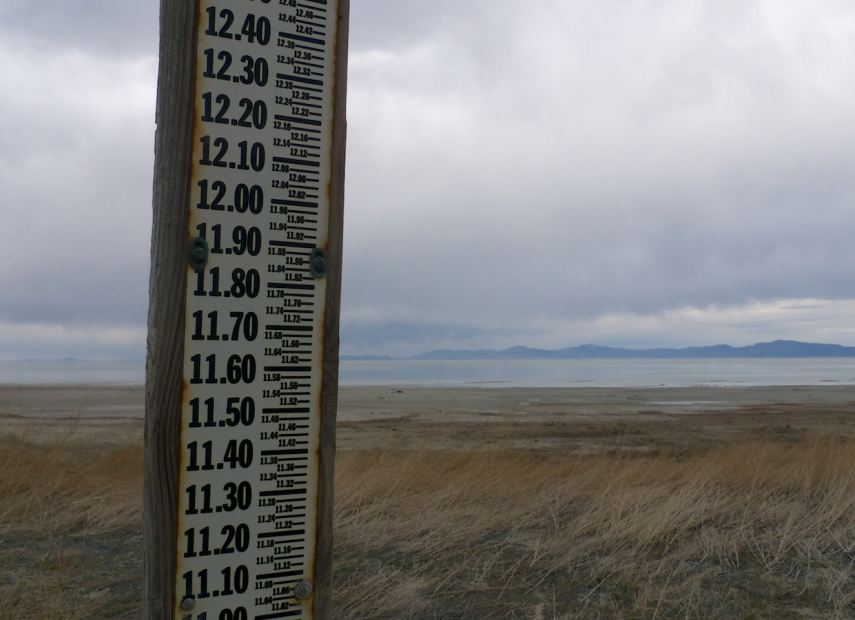
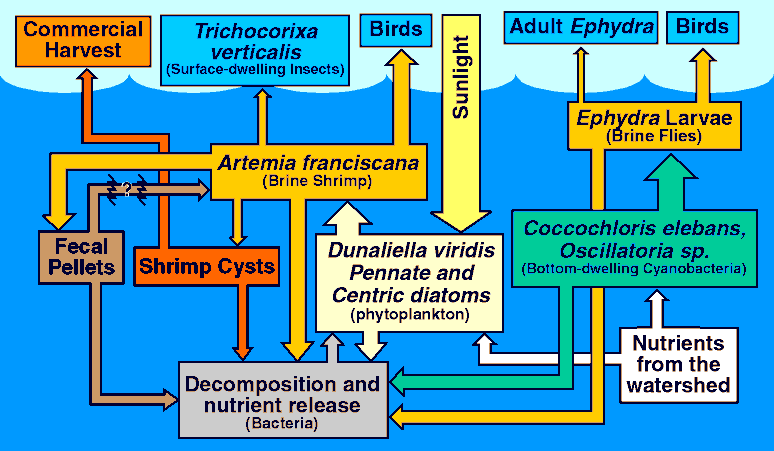
if I can make it across half, can I make it across the whole thing.. I’m intrigued, by it’s history, and by it’s current environmental impact.. I had read about the lake being split in two once.. the salinity greater on one side, and how hard it is to explain to people who see it as a wasteland, the practical Mormons who control Utah Politics, and the thrifty Railroad men. Its hard to advocate for a lake that no one really boats on, lives on, swims in or makes much money off of (brine shrimp, AKA the sea monkey industry, used for I think animal feed and hard to tell what else, does pump 57 million into the Utah economy, but that’s not much in the grand scheme of things these days..). It’s almost like the great test of environmental honor; you can only argue for the Great Salt Lake on it’s intrinsic environmental merits.. it has no NIMBY (Not In My Back Yard ) bedfellows, its only worth what it’s worth to shrimpers, magnesium harvesters, flamingos, and the daring few who venture out on it, driven by a mad companion or just madness themselves. I drive back down the point through the dark, and find what I think is the west entrance to the east causeway.. ( it tunrs out mit might have been a water control structure north of it) it’s got threatening signs.. I can tell many more people make it here than the set from the Spaghetti Western I departed from north of Dugway Proving Ground, but the gate is down, and I roar across.. I pass little industrial facilities, that look like pump stations, go over little archway bridges with sill more threatening signs, and even dim my headlights.. I start to worry.. there is an air force base to the east of me.. will it dump me into that.. are there yet more AFSP watching me with Nogs right now wondering what the hell is up with the RV crossing the causeway at 11pm.. the terrorists in Back to the Future had an RV (OK, a VW bus, but close..), could this be a terrorist attack.. can we kill them boss!? I end up on dirt berms.. I’m driving with my headlights off again, and feel the calm of marsh around me.. the road is wide again.. I have made it across.. arrested or not, I sate my obsession, and ponder how I might explain this to a judge.. I just had to see it your honor.. explorer’s burden.. I realize I am a bit lost, know I am still headed east-ish, but I see pumps running and salt lagoons filling up and emptying, evaporating ponds like at the south end of the dead sea. I have seen salting operations up close in Namibia and Mexico, so I know what is around me just by the pumps.. I come across a vehicle, and know the gig is up.. his headlights come on, and he pulls next to me, and doesn’t even ask, just sees the RV and knows it’s too weird to be dangerous. I think he was Native American.. he gives me a wide eyed look, and I shrug and tell him I am lost, and he motions me to follow him to the gate, with a funny smile and shrug. he leads me out past what turns out to be the Magnesium plant.. the tracks have disappeared to our south.. it’s a big factory, roaring in the night, dark but for lights on the smoke stacks, and we end up at a security shack at an entrance.. I pull up.. my guide slides out of his truck and walks to the security guard, a nice earnest young Mormon guy, explains coming across me 5 minutes ago to him, and he’s so amused that I somehow got back there with an RV he just offers to let me go.. he tells me I was trespassing, but kind of shakes his head in amazement, and I smile and tell him I’m just relived this ain’t the air force base. He laughs, and asks me if I crossed the causeway.. I demure, say something garbled, then I press the advantage and ask if there is a place to sleep by the lake, which is all I was looking for just hours ago.. he tells me to take the road out, and take a left then a right off the road from the base.. he and the Indian are laughing and staring at me as I wave goodbye and roar off.. don’t that beat all I can hear them saying.. I find my place in a state game preserve, stare at the stars to relax, pass out, wake up the next morning, cook breakfast, and wind my way down to Antelope Island for my last night, and yes, I pay the entrance fee and for my camping spot like a normal human being. As many of you know, as with global temperature, nature isn’t static, but it moves slowly, like a bureaucrat, or a sloth, and most things have time to adjust if they haven’t painted themselves into an ecological corner…when man is short sighted, he creates changes much faster than nature can adapt, and he starts to wreak havoc with natural balances that a lot of things depend on, migrating birds, shrimp, animals, and even nature lovers.. survival of the fittest argues that Adaptation is the Rule of the Wild when change is inevitable, but there is a sensibility of fair play that is being applied by conservatives and liberals alike in the Global Warming Right, in the moves to restore the Everglades with Bridges and maybe save the Vaquita with more fresh water flowing into the Sea of Cortez that says that it’s not fair to change things as quickly as humans do to an ecosystem, intentionally or not, shortsightedly or not, which grates the conservative sense of fair play in a place like Utah the way a deflated football might.. it just doesn’t seem right. The hope comes in here.. after that adventure, when I got to the Little America Motel, my favorite SLC haunt, I did some internet snooping before a truck driver buddy of mine showed up to bring me back to Reno for my next event, and I learned about the emerged two lakes, the difference in Salinity, dramatic enough to change the lake to too salty on one side and not salty enough on the other, and I learned how the lack of circulation is helping evaporation, keeping the water from sinking and cooling and circulating in it’s old way like the inter-oceanic heat conveyor, Thermohaline Circulation, on a small scale, and making the lake smaller than it has been in a while. while there is no direct correlation in the chart below between lake levels and the causeway or maybe global warming, the salinity thing is quite obvious, and visible..
The shrimp have a goldilox dilemma.. one side is too salty, the north, 28% salty, the other too sweet, the south, declining to it’s present 11%. Ocean water settles in at 3.5 %. It happens because there are no major natural tributaries to that north west corner of the lake other than rain water, which is as you know not in prodigious amounts in the desert, and that area, unlike the south and east parts of the lake, doesn’t have the runoff from the grand Wasatch Range, famous for it’s powdery skiing.
The lake used to be someplace between the 11% and the 28% salinity mark where it maxes out the holding ability of water, and starts to form a film, as it is on the north end now 5 feet thick, like a liner of sorts, all because of my buddy the causeway.. it’s not in the middle where it has been for a few thousand or more years, and that’s affecting the shrimp, who know their niche, and the things that feed on them, birds that end up in Alaska, Russia, or South America to name a few spots. This isn’t just a local issue. If affects habitats far and wide if the lake can’t support it’s transient, let alone permanent population.. What if people starved at Salt Lake City Bus Station, before catching the next ‘Dirty Dog’ to California.. someone would say something I would imagine.
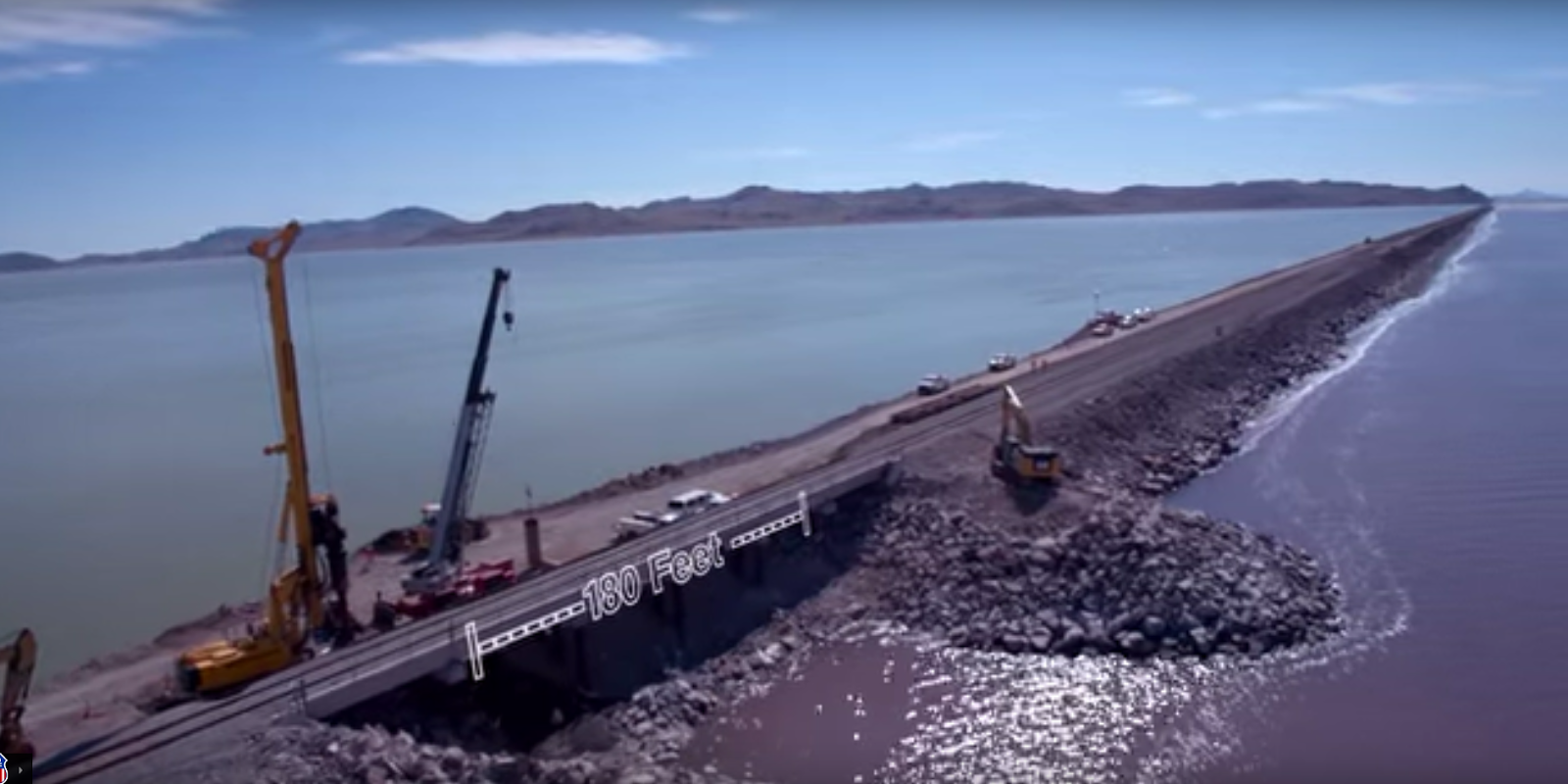
So this is where hope jumps into my RV, because the conclusion I came to a few years back was that this problem had few advocates and no solution in site.. by my present math I was wrong, because I know how long it takes to design a bridge, and it appears one will be done by October of this year, the year of our lord 2016. It turns out the railroad company, Union Pacific, the dominant western freight server which took it over from the former Southern Pacific Railroad Company (links for you foamers !) sometime in the 90’s after SP’s dissolution, had taken note, and was getting a bit embarrassed by the situation perhaps. Why? Railroads have become a symbol of efficient, AKA green transportation recently, as the world fights to end the carbon era.. if you are going to maintain a modern lifestyle and fight carbon, the iron horse is considered an ingredient in that effort since it’s more efficient than a truck, airplane and I think even a boat in moving cargo around the world, and the Railroad companies have motive to make it more efficient as time goes by. One company advertised they could move a ton of freight on one gallon of fuel 500 miles.. from my math that beats a truck by a little bit, which by my math needs three times as many baked dinosaur bones to do the same work. Before I started peeking into this again in the last few days, I had assumed that UP would go for a huge government funded reconstruction job, like the Tamiami Trail on the Everglades, 20 miles of cement pylons and work work work, money money money, but from what I can tell, UP is doing this work on their own and of their own accord. According to the press, they applied for permission to do the work in 2011, a few years before my adventure.. I just wasn’t paying attention I guess, and work began in the fall of 2015!
It’s an inherent instinct of environmentalists to distrust the motives of corporations.. they by reputation have but one motive, greed, and many companies live up to that reputation handily, and history is riddled with massive examples of corporate greed happening at the expense of environmental cleanliness, diversity and health, including at the expense of homo sapiens survival. Does UP want some ‘green washing’, the communication term for aligning a company’s public image with environmentalism, no matter the actual deeds they do? Did making a bridge make sense no matter the environmental consequences, and it just made sense anyhow, or are they really just doing the right thing for the right reason? I’m not a civil engineer, a railroad executive, or a hydrologist to judge, and I wasn’t in the room to know, but I know I like what I see happening, and I think it’s if not an ultimate solution, a step in the right direction. The bridge is going to be a 180 foot span with rock flanges to keep the water flowing, hopefully from north to south but either direction is good I think. I haven’t heard math to know how long it would take to either completely even out the balance or even it out enough to ameliorate damage to the brine shrimp based ecosystem, but this is a small little big deal. While the world is focused on the Panama Canal expansion, a similar effort that is good for business but might have environmental benefits due to efficiency of transport (ships, and I know from experience, are huuuge polluters, but size means savings, ecological and financial in that business. Unfortunately, like with the causeway, making shipping more efficient also makes transporting carbon fuels cheaper, and that makes them by the laws of economics more accessible, but let’s focus on the good.). Panama is far from most American’s minds except those in the transportation business, charming and amusing little place though I know it to be, but this is on our turf and it’s a noble act from what I can tell.. Here’s hoping the results are of benefit to all the birds and bees in the Salt Lake Valley, and to their human appreciators as well.. I look forward to the completion of the bridge this fall, and the reunion of the salty waters once again. Like the pulse flow on the Colorado or the release of water under Tamiami trail bridge, this is a big moment in American conservation coming up. For those who love the wilds of Utah, this truly is the place, and the place is about to get a bit healthier. Now were the Aral Sea, Mesopotamian Marshes, Mono Lake, The Dead Sea, Lake Orumiyeh, The Salton Sea, and others like it so easy to fix..but hope starts small, 180 feet at a time..
In Part One I wrote about how I had noticed that American Indian Tribes were using their tribal autonomy to do species restoration on their reservations all over the central and western part of the Contiguous US. I was surprised because I hadn’t seen any mention of it as a phenomenon other than one article in the New York Times. It turns out it has been quietly happening for some 30 years or more. I meant for this post to be a survey of all that is happening, from black footed ferrets to buffalo, but I got so much info on the buffalo I have decided to make a post just on it, Tribal Buffalo Restoration, and then do another final post on the other species that have been popping up (in the case of Prairie Dogs and Black Footed Ferrets, quite literally) all over the west. So this is part two of a three part series.
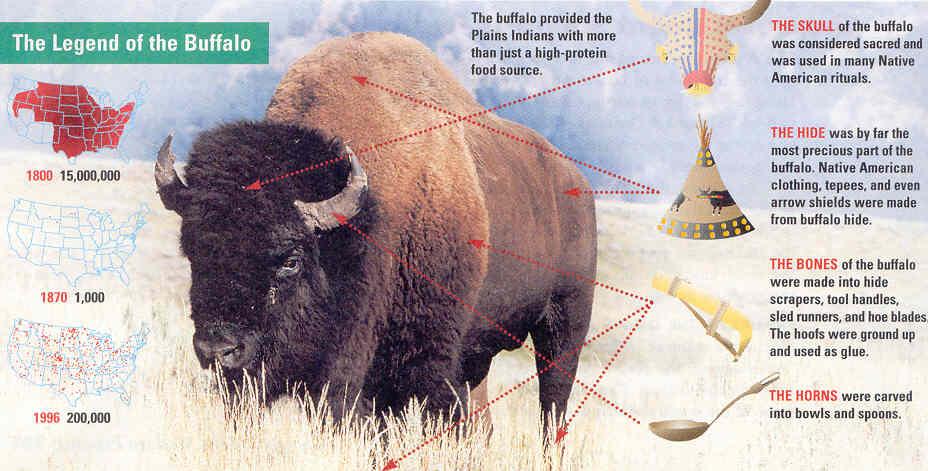
Right now is the golden age of the return of the Buffalo.. it’s happening all over the west, 120 or so conservation herds and growing, in addition to countless meat herds, and it feels like half of those restorations are on government land, and half are on Reservations, and as I dig, a lot of the groundwork was laid as early as the 80’s, and the herds are now in some cases becoming big and viable wild herds.
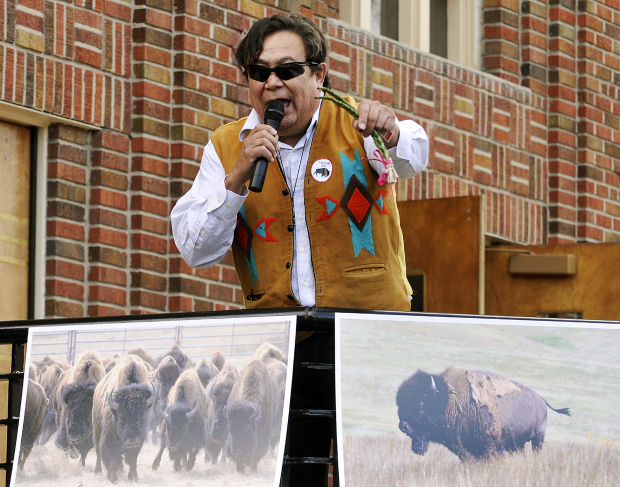
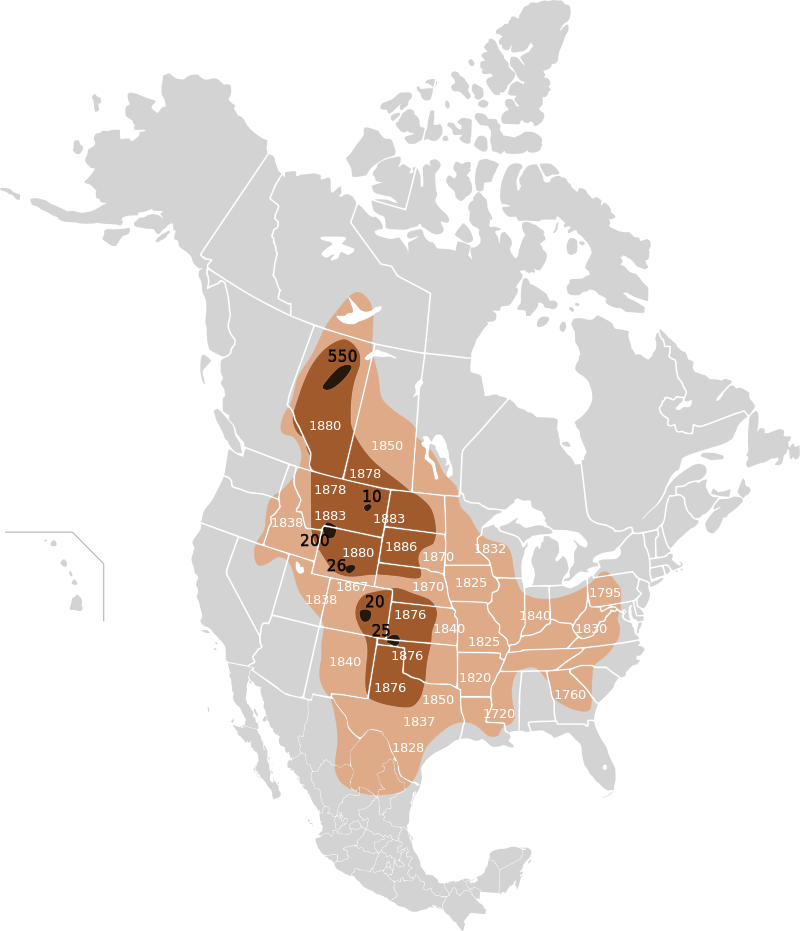
The numbers reflect that that is indeed true. After a quick but deeply informative interview with the head of the Inter Tribal Buffalo Council, a gentleman by the name of Jim Stone from the Dakotas, I now feel like a bit of an expert on all this, and it’s true, according to Jim, there are about 60 preservationists herds in the west, herds managed for pure ecosystem restoration, kind of to that National Park System level of ecosystem restoration, bu government agencies and even the World Wildlife Fund and the Nature Conservancy, and then there are about 60 herds that are for the Indians ( Native Americans if you like, they usually don’t tend to mind either way).. and by the Indians, and they have a neat and different perspective on it, but all roads lead to Rome, Rome being that they get them on the land where they should be, grow the numbers and maintain herds that help secure the genetic diversity and survival of not only this species but all the interlocking species of the Midwestern and Western fauna and flora. The distinction is, and Jim will tell you this flat out.. these buffalo ain’t just for looking at, they are for eating and enjoying and maybe even taking part in ceremonial life as well.. they aren’t museum pieces, but they are gonna be there all the same, disturbing and restoring the land, snorting and galloping and doing what buffalo do. The ITBC distinguishes itself from the mostly government herds on one side and the commercial herds on the other side by being a bit of both. They are there to meet a lot of goals, from Tribal self sufficiency to ecological restoration to pride and fun, and that’s the way it was 400 years ago so why not have it be that way again. Jim will tell you, there weren’t even Midwest buffalo without Indians, not since the last Ice Age anyhow.. they grew on that land together as the glaciers receded some 10,000 years ago, so why screw it up with too many rules now. The Story goes like this.. we all know how it started 15 million buffalo charging over the plains, and in woodlands and meadows from the Alleghenies at least clear out to the west coast. Then the Europeans came. They gave horses and rifles to the tribes, but it didn’t do to the natural balance nearly what westward expansion, trains and barbed wire did to the prairie.. wiped the herds out until they were down to about 2,000 individuals of Bison Bison at the turn of the last century. In a story that would be familiar to the followers of my Elk posts and many other conservation sagas, conservationists like Roosevelt and Horneday stepped in to cease the almost extinction as the progressive era began and created the first public conservation and preservation herds in places like Yellowstone, the Henry Mountains etc. From perhaps 70% of the Continental US, they were down to two small herds on small bits of land.
On reservation lands they suffered the same or similar fates. many reservations were land that had already been eaten over, or suffered from the destruction of the large moving herds perhaps hundreds of miles from where they were. The Dawes Act of 1887 conspired to privatize land to integrate herds, fracturing the ownership of many reservations and undermining tribal unity and governance. Other herds that might have been taken from the surviving herds or other remnants were destroyed by the power of the Cattle industry to stamp out TB and Burcellosis in the 1930’s where progress had been made towards restoration on a few reservations.
Time went by as the conservation herds stabilized, the Parks became successes, and tribes tried to regrow on their native lands now reservations, or grow onto reservations they were deported to from lands further east. As time went on they had a resurgence of patriotism with the American Indian Movement in the 70’s and started to see opportunities in their autonomy. While mostly a casual affair, they figured out ways to get by in the new way of doing things, with casinos, tax free opportunities, and in using the land. They began to develop tribal fish and wildlife programs to do similar things to their state and federal counterparts, and the more radical and passionate of them started to agitate for better environmental ethics and restoration of the way the land was before the white man came west. Why eat beef from the store when you can eat bison from the land? Logic began to return. A lot of these herds were created by one or two tribal members who just got a flea in their bun to make things happen. In the casual way of reservation life, sometimes it was just as simple as finding where some buffalo were and getting them, or to quote “Some tribal man or wife and got em and kept em here!”. There was always a sponsor of some sort who felt it was important and did the work. As Jim pointed out, many of these tribes didn’t have wildlife or food programs at first, and some still don’t. I bet a few designate one person to represent them because the ITBC needs a point of contact!
At some point these wildlife programs on all the reservations got together and created an organization to coordinate all their efforts, to have a common voice and a place to share their experiences and help each other in 1983, some 33 years ago, after what I imagine was a period of informal coordination between the more active tribal wildlife programs. It was called the Native American Fish and Wildlife Society, (NAFWS) and today might have 225 members plus Alaska villages. To the unfamiliar, Alaska doesn’t have a reservation system (with one exception in SE, the Metlakatla Tsimshian tribe. ) but instead is organized around something called the Alaska Native Claims Settlement Act, signed by old Tricky Dick Nixon in 1971. Instead of creating reservations, it created corporations and private land ownership for all the unclaimed lands of Alaska to be given to the native groups through the corporations. They have 45 million acres split among about 100,000 Eskimos and Indians, compared to 54 million acres split among 5.4 million Native Americans in the lower 48. It’s collectively about 5% of the surface area of the US. For perspective, the National Parks cover about 14% of the US. Not a bad chunk of land, but a bit rough to think they used to have it all, but they have moved on from worrying about that to taking care of what they have in most cases.
While I’ll write more about the NAFWS in the next post, the hero’s of this post are it’s offshoot about ten years later in the early 90’s, 1992 to be exact with 7-12 tribes. a group called the ITBC, the Inter Tribal Buffalo Council. People started to feel that there were so many buffalo issues, it was so popular, that it needed it’s own group. The original members were mostly from the northern plains with some token Wisconsinites and a group or two from the Southwest Pueblos. Today in 2016 the ITBC has a membership of 60 tribes in 19 states, some 52 of which have at least a few bison, up to the grand wild herds that first got my attention to write any of this last year on about 3 reservations, and growing. As I said before, they have a purpose that puts the tribes first. They are not Buffalo-centric as the preservationists are, they are Tribal-centric, but it works out pretty well for all involved. You can’t hunt bison on federal lands, but you can on Indian lands, but it doesn’t mean that they aren’t meeting all the other goals of restoration ecology as well, they just like to eat, and they have been eating buffalo for ten thousand years. Unlike a lot of regular american producers represented by groups like the National Bison Association and a lot of local groups, they don’t have much pressure to maximize their return on investment. They are tribes, not businesses, so they have latitude to meet as many goals as they see fit. While the holy grail of Ecosystem restoration is obviously free ranging tribes, it is worth nothing that the majority of their tribal herds are not, maybe 40 of them or more. They are either pen stocked, or contained geographically, but for the survival of the bison, it’s great for genetic diversity and for whatever land they inhabit, which they treat much better than their usual tribal competitors, European Sheep and Cattle. Some of the reservations are small so Free Ranging Herd’s are not viable, and others have Cattle and Sheep on them so it’s a it of a negotiation to get the Tribe to accept a newcomer. In most cases Jim said that it was one tribal member who got really passionate about it, and reminded his fellow tribesman of what was. The pen stocked herds help supplement local diets and offer ceremonial parts and even craft and other secondary product options. An example of one of these small managed Herds is with the Oneida Tribe of Wisconsin. While buffalo did roam in small amounts through the woods of Wisconsin in the days of Old, it would not have been in the numbers that Thundered along the planes, so this is in keeping with the local ecology to some degree. http://www.oneidanation.org/farm/page.aspx?id=3902 You can see from the information provided that they are basically farm raising organic or near organic Bison for slaughter. It’s not exactly ecological restoration but for the acres they live on, but it’s a nice start and a good idea culturally and environmentally. Now onto the big herds, the ones that are in some way full restoration of Buffalo to the ecosystem. Now they might not be introducing wolves as well, their partner in population control, but they are moving across the west at their own pace, and it could be argued the populations need to grow on their own to be capable of surviving such an onslaught someday, and furthermore, Indians don’t necessarily want that competition. They can think of plenty of things to do with the ones they take. What they don’t mind is free ranging herds on some of their larger reservations where the land used to have them and can sustain them. I haven’t heard it said but it’s my hunch that they are easier on the land than Cattle, move around more and disturb the land in a way more appreciated by the other local fauna who co-evolved with them. The Navajo Reservations of the 4 corners, which it has been mentioned to me have a fondness for sheep herding of all things, are one place I have seen erosion issues and degradation associated with cattle herding. I once drove through it, conscious to avoid the human wolves of the tribal police variety who seem to love speed traps, and saw more than a few dust storms that looked out of place despite my desert surroundings. as a contrast to this, Buffalo are what are described as Intelligent browsers. Since they evolved with the local flora, they have better instincts for preserving it to keep growing. There are other animals like bird species that have adapted to taking advantage of the ways in which they disturb the prairies they dwell in. They are the antithesis of a goat, which eats anything and everything it can get it’s hands on. The tribes who have hit the ultimate mark by this writers standards are these:
Crow Tribe of Montana Fort Belknap A’aninin and Nakota of Montana Yellowstone NP pure bred Fort Peck Assinibone and Sioux of Montana Yellowstone NP pure bred Northern Cheyenne of Montana Tesuque Pueblo of New Mexico Uintah and Oouray Ute Tribe of Utah Pubelo of Pojoaque (this is a tiny res in northern NM, 3 square miles, but it manages a herd on nearby Rio Mora Wildlife Refuge) Yankton Sioux of South Dakota click here for the full list
When I asked Jim who might be another great candidate for a free ranging tribe he didn’t hesitate long before mentioning the Cherokee of Oklahoma as being one of the places where free ranging herds had room to grow if allowed to. They are growing a herd taken from NPS herds in South Dakota and North Dakota but they are still kept in a fairly large enclosure as their numbers grow into the hundreds. It’s all about expanding herds and in some ways tolerance he said, balancing environmentalism, conservationism, commercial and sustainability issues, but these free ranging herds go out on a limb towards the fruit of land restoration. There is still a lot going on in this world. Indians have become the buffalo wranglers of note since they have so much experience, with the feds sometimes borrowing their expertise. Things as common as a roundup for inoculations and testing require a skill and experience no longer commonplace, and sometimes the feds and other conservation groups come to the tribes to get it done. There is discussion of the USFWS turning over some or all management and possession of the National Bison Range, a smallish preserve with a herd numbering in the mid hundreds in western Montana, to nearby Salish and Cootney tribes. If so, this wouldbe yet another Free Ranging herd to add to the list. Montana really does seem like the hotbed of restoration and growth of the wild Bison, not just the wild tribal Bison, and not just thanks to Ted Turner anymore. Much of the work is reportedly grant driven, with the feds through USFWS and other entities handing out money to get projects done that the tribes can’t self fund. One notable recently granted project was for wildlife corridors in Salish country that might someday support wild bison. http://www.fws.gov/mountain-prairie/tribal/twg.cfm On the Fundraising front, in addition to ITBC, two organizations have popped up to raise money for this cause. I can’t say vouch for them one way or the other, but all effort tends to be good effort. They are the http://www.tankafund.org/about and For more information on the Tribal Buffalo Movement, check out the ITBC website, or check out the Tribal Guide to Buffalo Management, which was written in part by Jim Stone of the ITBC. Another resource is a book called Buffalo Nation by Ken Zontek who followed this movement and had the courage and the brains to write about it for the printing press. In addition to the ITBC, two organizations that exist but I know very little about have arisen, the Tatanka Fund and the Adopt a Buffalo Program from the Sacred Ground Coalition.. http://www.adoptabuffalo.com/ have a peek if you wish.. Hope doesn’t always come exclusively from the future.. for me, perhaps as with some of the more environmental and nostalgic of the Native Americans involved in these programs, hope comes from wanting to make the future as great as we know the past was.
First, it was just a trickle… This post is ripe for water metaphors, but I’m flowing off course. Something is happening to America’s Rivers, and for the first time in a long time, it’s good. Positive changes are starting to flow freely over the entire Continental US (sorry, I can’t resist), and it really is a deluge. Take a look at these statistics released by a non Profit organization out of Washington DC called American Rivers, which is the national environmental advocacy group for all the river’s and streams of the US.
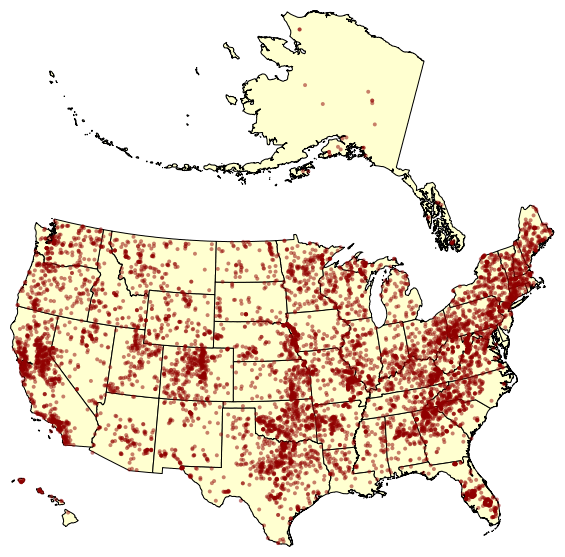
The Baseline: There are 79,000 dam’s registered with the Army Corps of Engineers, who are the major government flood control agency, and are staffed by a combination of civilians and members of the US Army’s Combat Engineers. In the West, an additional agency called the US Bureau of Reclamation has the job of damning ( did I leave an in there.. sorry!) water to produce electricty and provide water for a few cities, but mostly for agriculture and powe rcreation. In the case of the colorado river, about 20% of diverted water goes to cities and 80% goes to agriculture, and the same dams do create enough electricity to power millions of homes (1mw tends to power about 1000 homes is the standard way to think about it).
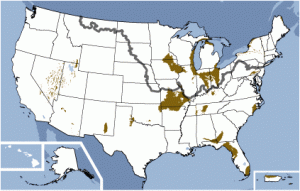
Here is a very important fact: Due to these two agencies and many other industries, from old mill’s to electricity companies, being busy as beavers, 600,000 mi (970,000 km) of river, or about 17% of river length in the nation, is not flowing freely due to dam’s. Since there aren’t many natural lakes south of the line of glaciation from the last ice age in the US, which is climate and altitude dependent, but tends to run at about 40 north, somewhere between Interstate 80 and 70, so that any time you see a lake south of there, and possibly even north of there that isn’t a swamp or a beaver dam, it’s got a dam made by mankind in the last 200 years holding it back.
limit of Wisconsonian Ice Age sheet glaciation with Carbononiferous rocks in brown lakes are unlikely to occur naturally south of this boundary
There are about 8100 dam’s considered Major Dam’s across the US: The National Inventory of Dams defines a major dam as being 50 feet (15 m) tall with a storage capacity of at least 5,000 acre feet (6,200,000 m3), or of any height with a storage capacity of 25,000 acre feet (31,000,000 m3)
Dam removal’s by year according to American Rivers of all sizes:
1999 20
2000 28
2001 23
2002 44
2003 34
2004 37
2005 34
2006 33
2007 54
2008 64
2009 50
2010 60
2011 50
2012 63
2013 51
2014 78
2015 62
2016 72
2017 86
2018 82
So some quick pro’s and cons:
What are Dam’s good for? Flood Control, although it has to be managed right. When it isn’t managed right, you flood half of Nashville as happened a few years back. And we aren’t supposed to need flood control because it’s illegal to build in flood planes. we only need flood control because of how we screw up water movement in the first place usually. it’s often an excuse for the two things below. Electricity Production Creation of Recreational Lakes Water Diversion for irrigation and to help cities grow that don’t have sufficient local groundwater
What Are Dam’s Bad for? The Ecology. The Temperature of the water and whatever it runs into after leaving the dam. They turn cold running rivers into hot water baths where increased surface area allows the sun to heat up and often evaporate water. Migratory animals that used to use watercourses as migration corridors. Andromedous fish that go to the sea from rivers, and return from the sea to spawn, like salmon. Fish in general that need to not be arbitrarily separated from each other for genetic diversity. Water Storage, since they can lead to a lot of evaporation on hot days, which can add up in places like Lake Mead. Trapping Sediment.. they trap sediment that should be flushing down into the river below, and then onto shorelines to rebuild beaches as they roll with the tides and currents. Throwing off the balance of the earth! I can’t make this up.. when you trap this much water at levels higher than sea level, you literally throw off the centrifugal force of the world.. like throwing your arms out when you spin around, you notice a little big of movement in or out changes a lot. It might be why the US Naval Observatory had to reset the Atomic clock by a blip recently.. the earth is literally spinning a little slower now.
Why remove dams? If they fail, they can kill people who don’t expect a flood, and destroy a lot of property. They destroy fish migrations so profoundly that they push animals to local extinction, and sometimes total extinction if a species is fairly localized, and then screw up everything else that expected them to be present, from predators like eagles and bears to bacteria and insects, who loose their support in the food web. They heat up water so much it can screw up whatever they drain into. The Long Island sound is getting so warm comparatively that it’s getting dead zones, largely due to the change in water temperature due to dam’s on it’s tributaries, that collect sunlight and heat, throwing off centuries of temperature balance, and crating unwanted algea, red tide, and plankton blooms. They collect so much silt they deprive lower rivers of sediment until they hit bedrock and become like sluices. And they don’t provide sediment needed for beach rebuilding.
So enough public service messages.. this blog is about hope, where is the turkey, where is the good news?
Well, I have been tracking this dam thing for a while, and it seems to keep getting bigger. It started back east, since you can’t mess too much with the Bureau of Reclamation, well, you couldn’t until a group of filmmakers decided to recently, but I’ll get to that. The Army Corps of Engineers, it’s fair to say, is a little more thoughtful on these matters, and so are eastern environmentalists, and they can get the upper hand because they have smaller rivers and larger numbers.. water is more plentiful in the east, so the fight is often less contentious. Dam’s became a big deal about 15 years ago it feels like. States started to inventory them to make sure they were safe.. we had been building them for so long, especially in the heart of the American Industrial Revolution, New England and the north east, where men like Eli Whitney harnessed rivers for industry the way flour and saw mill owners had been for centuries. Mill ponds and dam’s are thought to be as much a part of life in the north east as Moxie Root Beer and local corn, but they are definitely a post Columbian development. In small numbers they weren’t necessarily the worst thing in the world. They ground our flour, sawed our timber, and gave us a place to swim on hot summer days. But then Eli invented his cotton gin, and we started to come up with hundreds of other things to make, and the North East with it’s rivers was the place, and then another North Easterner, Edison, started to electrify us, and it became pretty obvious that one of the easier ways to do this was to pour some cement and throw in a turbine. You didn’t have to do the work within mechanical distance. You could lay wired and do it where the people were, or where the raw materials were.. Dam’s proliferated all over the North East. But there was a cost, there always is. Salmon went the way of the Dodo bird.. there used to be Successful Salmon runs from the Canadian Border with Maine all the way to the Housitonic River near New York City it’s believed.At one point recently there was only one river with anything approaching a healthy salmon run south of the Canadian border, and from what I heard, it was the closest river to it. We passed the Endangered Species Act (ESA) way back in 1973, but it was some 40 years after the last major tranche of north eastern Dam Building, back in the 30’s. rural electrification would bring Dam Building to places like the Tennessee Valley and Texas all the way into the 70’s, but there wasn’t much water left to dam in old New England, which tends to be the first for a lot of things in America, given that it’s got more post Colombian history than almost anywhere else, and is our most populated region.
Atlantic Salmon not too charismatic, I mean, look at that awkward humble look, but compared to their buddies Shad and Alewife, and good old Eel, they are rock stars!
It took a long time for the ESA to get around to fish. First off, they aren’t too charismatic.. every tried to talk to a salmon? I have.. they aren’t too riveting, see the humble look above, although they can be delicious. There were a lot of species in deep deep trouble, and Atlantic Salmon weren’t necessarily going to go extinct, since they have healthy runs all the way into Labrador, and in places like Iceland, Norway and Scotland, but we eventually got around to treating locally extinct as almost as important as extinct. And don’t forget that as part of a food web they affect other things. As we try to recover the North Atlantic Right Whale, it shares the sea with the Atlantic Salmon.. while it can be complex, it’s assumed that healthy runs of salmon are good for the Whales, since perhaps what the salmon eats gets munched up into fish doo that feeds the kinds of krill and plankton that the Whales eat.. while it can be more complex than this, as yes, animals do compete.. in this case it feels pretty safe to say that healthy salmon populations help make healthy whale populations. Anyhow, the salmon became the rallying cry for starting to drop all these old industrial dams in all sorts of forgotten places on river after river, starting in Maine. While the salmon was the charismatic door opener, other species like the alewife and shad and even freshwater eels. think of them as the not so cool kids that get to finally go to cool parties because of their cool friend the Salmon, who literally get’s to knock down the door. As we move down the coast, there is a state that people consider rural, but to visit it is to know that while it has many small towns, they weren’t usually farming towns.. Pennsylvania. Those small towns tended to be small industrial towns due to how many steep rivers there are in Pennsylvania. According to American Rivers, PA has led the dam removal list for 13 years! In West Virginia and other parts of Appalachia, Dam Removal is tied up with Coal mining issues.. Dam failure is a big deal there ever since the deadly Buffalo Creek Dam Failure in ’72 and The Inez Coal Tailings Dam Failure more recently in 2000 in Kentucky screwed up hundreds of miles of stream and river. Anyhow, why write about this now? Well, first off, I do want to promote this activity.. as much as I like the sound of water rushing over an old dam, they kind of represent a bad metaphor to me. Water is need, it’s the most important of elements on this earth to us, and damned rivers are like denied human need. They are the natural equivalent of corruption or repression.. they just bother me.. I like my wants and needs to be satisfied freely, not controlled by some engineer. it’s a funny way to think about it, but sadly it’s how I think about it, but back to some different Why’s. While this is a local issue back east, where devolution in government is a tradition in itself, it’s become a national issue out west, where like I said, it’s a lot more contentious, as water is a lot more scarce, and over-promised. A few major things have been going on. After a lifetime of busy as a beaver activity by the Bureau of Reclamation, it’s finally starting to loose it’s iron grip over the west. Like a Dam falling apart, a trickle is a weakness that could very soon be a deluge. The trickle started years ago when a somewhat liberal Secretary of Interior by the name of Bruce Babbit decided to do something about how there was too little fresh sediment getting into the Grand Canyon due to dams upstream, most notably the Glenn Canyon Dam, and big artificial flood in 1996 to mimic spring floods that used to roll unbridled down the Colorado River, to rebuild gravel bars and deepen channels for the legendary rafting trips that follow in the course of John Wesley Powell. He literally opened the tap and in doing so loosened some of the iron clad doctrine of dam management as being wholly intentionally obtuse to environmental consequences. After that there was a long gap again, 15 years of so before a very public and successful series of dam removals in the North West. The first, in 2011, was a small tributary on the Colombia river, not too far from Portland and Hood River, called the Condit dam, seen above being released before it was completely deconstructed. The Bureau of Reclamation didn’t fight it that much because it didn’t have much to do with them. The Condit was a hydroelectric dam only, it didn’t have much use for shipping or agriculture. For those who saw this video however, this was a big dam deal. Why? Western environmentalists almost all have one thing in common. They almost all read a book called The Monkey Wrench Gang by an old part time National Park Service Ranger from Moab named Ed Abbey..
it came out in the 70’s, and while I don’t advocate the activities fantasized about in the book (the first amendment guarantees your right to fantasize all you want!), the main premise of the book is about a group of 4 environmentalists in the Canyonlands of Utah who work to take down the Glenn Canyon Dam in Page, Arizona, that created the controversial Lake Powell and buried a whole world of red rock canyons. The Condit Dam being blown apart in HD color whet their appetite something fierce. The Elwah River restoration was already in the works, and happened in the next two years, and it just fed the hunger.. it was a huuge success, opening a river that flows from the High Olympics of Washington State, removing two dams and restoring a watershed with a lot of research already into it that recovered so quickly that within a year scientists were proclaiming how stunned they were that it could change so quickly for the better.
Before even any of these dam’s came down, the mother of all dam removals so far was in the works, but they made a few tricky gambles that didn’t pay off. What I am talking about was the Klamath Basin Restoration Agreement. While all quite noble, and I’ve seen the Klamath, it’s beautiful, and it has a local Indian tribe that loves it and is willing to go to bat for it, but it was only going to cost about 500 million bucks to take down the dam’s, but they turned it into an extra 800 million dollar boondoggle, to make everyone happy at federal taxpayers expense, and the local congressman, a tea partier to be sure, decided to put the fix in until the agreement expired after 5 years. I want it to happen, badly, but I did dig into it a little bit, and I can’t blame ol’ congressman Craig Walden completely in these tight fiscal times. It turns out the Electric Company responsible is going to take down the dam’s anyways they recently admitted, so it’s kind of a win for all now.
But the real big news, and it’s not often that I cover something twice on this blog, as there are more stories than I can shake a stick at, but the big news came from a movie, a documentary to be sure, and I think this movie might be responsible for a big jump in numbers of dam removals in the next few years, if you remember the chart I put up way back when at the beginning of this here story from American Rivers. This movie was done by a bunch of enviro-sweet guys with the backing of none other than the master blacksmith himself, Yvon Chouinard..
Famous to most as the man who created the clothing line Patagonia, but famous to me and my buddies as the guy who started making America’s real rock climbing protection back in the 60’s with his rebel buddies at Camp 4. As much as I make fun of Pata-Gucci and it’s water repellent recycled plastic bottle broliciousness, I don’t know anyone who makes fun of the original gods of Camp 4. Chouinard made a ton of cash selling organic t’s and the original hardware, and he became a big environmentalist, and decided to bankroll the making of a documentary I already spoke about in my post on the arrival of documentaries as a real modern force in environmentalism. While it doesn’t quite have the global impact of Inconvenient Truth of Under the Dome, it’s the prettied documentary I have ever seen, and it stole the narrative of what this post was supposed to be so perfectly that I had to spend a year rewriting it ( I literally was going to the tell the same story, down to every dam he wrote about, and then one night I clicked watch on Netflix, on a cold night in Fairbanks, and there it was, pulled the rug right out from under me.) The film is called Damnation, and it might be the harbinger of a national movement to remove dam’s that don’t have a direct impact on global warming, since many dam’s cancel out their global warming benefits by being big heat sinks.
That end part get’s me.. pretty neat..great music. The dam they paint at the end there is the Matilija Dam near Santa Barbara Ca.. it’s not holding back a huge river, but it’s a useless dam to all but the local search and rescue team who use it for rappelling practice. it’s nothing compared to the big dam’s on the Colombia that the movie talks about, but now it symbolically huge. This movie started a big discussion, made it hip to be square enough to want to take down dams, and the public battle has now moved from the Klamath to a bigger public battle in Chouinard’s old back yard, the Hetch Hetchy Dam, one of the strangest of all, the water source for super liberal San Francisco, but in a National Park, Yosemite to be accurate, an anomaly if there ever was one. It’s getting big celeb attention now from the likes of Harrison Ford, and the lawsuits are drawing blood in state court. San Fran, always a hotbed of scientific creativity, is now researching aquifer storage as an alternative to piping their city water from a National Park about 200 miles away, through the San Joaquin Valley which obviously has it’s own water problems right now, and all the way to SF. But the big question is what after Hetch Hetchy, which is a great cause and a fascinating media curiosity, but what will come next. Will the east just keep quietly getting rid of all the unnecessary dam’s till we are down to the 8100 or so we are actually using for electricity, which will help our streams, rivers and oceans immensely? I hope so, and maybe someday Atlantic salmon will be plentiful again like their pacific counterparts on the shores of the American portions of the Atlantic, but what happens out west is where the big fight will be. If you watch Damnation, it lays out all the Cadillac Desert conversation I am sparing you for the second time. But what if electricity and Salmon go head to head, global warming vs global species diversity.. what will happen, and where? And not to limit this to the west.. there is a river in South Carolina I know about where the lack of sediment coming out of it is thought to be the reason why the fort that was the site of the attack by the 54th Massachusetts Infantry that was featured in the movie Glory, Fort Wagner, is now washed away and gone, it’s former site now 200 yards or more out to sea. While research shows it was gone by 1885 even, perhaps before that dam was finished or even conceived of, perhaps due to a local breakwater, the dam certainly isn’t helping matters on the South Carolina coast, and Morris Island keeps getting smaller. Trust me, I spend a day out there.. pretty place though. But let’s stick to the good news.. the good news is that it’s happening. While I might mourn a few old mill dam’s that might get taken out and remove a little character from our land, nature is better for it, and so many of these things are anachronistic and even ugly. There are 70,000 dams we can remove before we rub up against global warming from what I can tell, and at about 60 per year it’s not going to be a major issue any time soon, although the Salmon advocates might make it one, which is to me a conversation worth having. For now what I want is wild running rivers.. I now realize I didn’t completely know what that was as a kid, since the biggest rivers near me spent a lot of their time in that 17% empressed lake zone, and not the 83% wild running zone. The local power company was happy to offer tours but I feel like no one was offering tours of the wild river when I was a kid, the one that rippled over rocks that you could hold onto and go for a ride from, slide down and be a fish in.. I had to figure that out for myself after I got sick of that bathtub feel swimming in the local reservoir, the stagnancy.. I think we all dream of an America that’s a bit less stagnant. I dream of an America that takes down 80 or more dam’s next year.. can’t be too hard.. the tide has turned.. roll on mighty rivers, roll on..
The Christmas Song (Chestnuts Roasting On An Open Fire) – Nat King Cole Its one of the best Christmas songs you have to admit.. some of em feel like a brain tumor (yup.. Jingle Bells, sung by Simon and The Chipmunks click this link at your peril.. it’s a special level of hell made for your Aunt Thelma), but when this one, Nat King Cole, gets stuck in your head, it’s not bad, it does make you feel warm.. you feel the fire, smell the smell of roasting sugars, and it feels cozy… pre-global warming cozy… nothing to worry about cozy… it’s a damn good song. But what the hell was Nat King Cole talking about? It’s a rare American city where the festive cheer leads to roasted chestnuts, but you can find em sometimes, at Christmas markets and state fairs. My first time seeing them of all places was in Europe where the crop is more steady. It was a lonely Christmas in Munich, and I wandered their famous Christmas Market, complete with Glockenspiel ( A favorite joke German word of a college buddy of mine, and how relieved I was to find out it was just a clock..) and some guy was roasting these little round things over coal and it turns out they were little salty morsels of goodness, Chestnuts in English.
As a kid I was luck enough to have a mentor who was a Vocational Agriculture teacher and knew his forestry, and he once told me about the great American Chestnut, which wasn’t a distant memory when he was born in 1938. If you read accounts of the first settlers Poking into the American Wilderness and past the Alleghenies, men like Daniel Boone and Davey Crockett, they spoke of game so prolific you didn’t have to be a great woodsman to kill them, you could almost swing a stick. The forests of the east were thick with game, in part because of the die off of Native Americans due to introduced diseases, which led to a lull in hunting pressure for years or decades in advance of European Western Expansion from the Atlantic Coast, but greatly due to this one tree, the American Chestnut. Their nuts were so nutritious and ample that they coated hundreds of thousands of square miles of forests with deeply nutritious food. Naturalists estimate that had no other impacts happened, no European encroachment, hunting pressures, predator extinctions or invasives, earth worms from ship holds or land clearing, that the loss of the American Chestnut still would’ve cut game numbers by huge percentages due to loss of such a rich forage. What Krill is to the Ocean, the basis of the food web, The American Chestnut was to the Eastern Forest of the US.
It was 1 in every 4 trees across the Eastern Forests of North America, but a blight took it, reduced it from billions (yes, with a B, they estimate 4 Billion) of trees to nothing in just years, from 1904 when some nursery stock was brought over to the New York area from Japan with a peculiar blight (hmmm.. if they know this much, do they know the actual shipment?) A Biologist discovered it as it killed a stand of Chestnuts at the NEw York Botanical Gardens, but the cat was out of the bag, and it spread for the next 40 years until there were essentially no mature trees left by WWII.
The same thing happened to it’s smaller cousin, the American Cincquapin, which struggled to hang onto life in places like Arkansas but did fare slightly better. You might find places where shoots kept trying to grow from old seeds of the American Chestnut, or you might find a Chinese Chestnut and confuse it for an American one ( I did once in 1994 on my last days on a very long trail as it ran through New York State where I patched up a missed section in time for, yup, Christmas. Spikey looking nuts, but my mentor figured it was Chinese sadly), but they would die by 30 years old, 30 rings, almost without fail.
Well, as luck would have it, almost without fail. The way nature works (since I just got an earful on Darwin in the South Atlantic, on some lil’ islands famous for a brush with the big state in 1982.) is that if you attack 4 Billion individuals with something, inevitably, one of em is gonna adapt and survive, and it turns out, far and wide, woodsmen and naturalists started to notice. Wikipedia, always ahead of me, but not quite a place of Christmas cheer, has a list, updated to 2015, of all the known surviving individuals.. https://en.wikipedia.org/wiki/American_chestnut it’s these individuals that led to two distinct and interesting attempts to bring the Chestnut back, to literally restore the basis of Eastern Ecology prior to the 20th century, so altered by the busy hands of Americans (Idle Hands do the Devils work we were all told, and man were we busy.. my most popular posts, no matter where I write about in the world, are all about efforts to restore ecological balance east of the Rockies, which ain’t easy, because us industrious Bi-Pedal Beaver Monkeys known as Americans sure screwed it up!). Now I am not a Botanist.. I hardly know what a cell is. I slept through that part daydreaming (and occasionally full on dreaming, a bad class sleeper was I) of History, Politics and the woods, my three childhood loves, but the way it has been explained to me is that there are two separate efforts to restore the chestnut, and in true American spirit, both are welcomed. One is based on hybridizing with Chinese Chestnuts, the other on breeding resistant American Specimens only if I understand. The names are quite similar: Located in the very western point of Virginia on a 150 acre experimental farm loaded with chestnut experiments, near the Cumberland Gap and Bristol Tennessee, near Clinch Mountain where the Stanley Brothers learned to sing, The American Chestnut Foundation is using the Chinese Chestnut genes, about 2%, 98% Native Bred, to make the process happen fast. I’ll let them explain their process for those who want to know, something they call Backcrossing to enhance genetic diversity past the two somewhat resistant trees they started with, and wove Chinese Blight Resistance into. http://www.acf.org/r_r.php The other guys are the All American Act, started in 1986 in Western Virginia and West Virginia, in and around Virginia Tech, known as the American Chestnut Cooperators Foundation. They are trying to slowly but surely hybridized a great breeding chestnut crop that can handle the hot humid conditions that foster the blight with home grown resistance. It’s a long road, if not longer for them. They also are already placing specimens back into forest both in promising places and in locations where they have discovered other survivors of the great blight in the hills above Blacksburg, above the great Shenandoah.
Both Organizations will admit to you that this is a looooooong process. They both seem to have started in the 80’s, and with just a few individuals, both human and chestnut, and just bringing a chestnut to breeding age, with no screw ups, while fast for a tree, is a 6-10 year proposition. It’s going to be a long time before we are sprinkling seeds from George Jetson Space Scooters
to bring back 4 billion plants, but from over the pond, it’s a noble damn effort that can make a man homesick on Christmas eve.. it’s the American spirit of can do, bringing back America’s backbone tree, done the American way, but any means possible, and it’s the kind of story that brings hope to the soul and maybe in 50 years, home cookin’ to the belly. For now I will subsist on Roasted European Chestnuts, but in my heart of hearts and mind of minds, I am rooting for both of these efforts, and dreaming of Daniel Boone, fighting off well fed black bears in the heart of Kentucky, to bring home a fat chestnut fed Christmas Elk to his family on the homestead, with perhaps some chestnuts for roughage on the side, roasted by the same fire with fat running off the spit to hiss and spatter by them, maybe even flavor them. While my surroundings might be civilized, I am a wild American at heart, and like toys under the tree, Christmas is about dreams that link the ages isn’t it.. despite my now so civilized surroundings.. Merry Christmas, and may there be a Chestnut in your future, to feed the growing Elk populations of the American East, and our wild souls.
This is a pretty simple idea, and I wish the New York Times hadn’t beaten me to writing about it first. I better write about it better. The gist of it is this:
There have been dozen’s of animal species extirpated, which is a fancy word for hunted out, poisoned out, or habitat destroyed out of wide portions of their range in North America, most particularly the inhabited parts south of the Arctic. Think of the pieces I wrote on Elk, or one I plan to write on the Plains and Wood Buffalo.. they used to roam free in Pre-Colombian America, before a combination of disease, colonization, wars, barriers and deforestation and treaties closed the American Frontier sometime in the late 1800’s.. it had taken about 400 years to completely disfigure the landscape and interrupt the ecosystems almost beyond recognition from the first arrival of European man in any significance. It had created one of the world’s most fascinating nations, but it had come at a cost to both the original inhabitants and the flora and fauna. What had been places for Buffalo to roam hundreds of miles were now criss crossed by barbed wire. Forests where the Lynx or the Elk had roamed had been cut down for timber for firewood and building materials worldwide. Huge swamps like the Great Kankakee had been filled in for farmland, and the deserts had been stunted by cattle grazing. This was the new reality of America: not a corner of the country had escaped some sort of monetization and degradation, and it had chased out a lot of species to remote corners to ride out the storm if they weren’t put into extinction entirely. The Progressives came in, led by Muir and Roosevelt, Pinchot and Mather, and small parks sprung up to preserve last bits, and legislate what had been informal animal efforts to survive and some human efforts to not put the final blow in by preservation groups. We started National Parks, and then State and Local Parks, as much for recreation as for Biodiversity and even single species preservation. The Department of Interior grew, but then under the second Roosevelt and the Acts of the great depression we bought up huge tracts of neglected and abused forestland and nursed them back to health for both economic and ecological reasons, creating National Forests and Nature Preserves and Wildlife Preserves, and National Grasslands Etc. Etc. through the Department of Interior and it’s many reporting organizations like the USFS, USFWS, and the BLM. But the whole time, one group seemed to shake it’s head, like the famous Commercial from the 70’s of the American Indian who is saddened by so much degradation and litter.
It was the American Indians, who had spread out to Reservations, mostly in the American & Canadian West, where they are called Reserves, from homelands all over the US and Canada. Some where nearby, like the small reservations in the east in places like Connecticut and Florida, and out west, Utah and Arizona and Washington, where it thankfully made contemporary sense to give the Natives land where they already were, and some, as many know from studying the Trail of Tears and it’s many associated displacements, were as much as a thousand miles away in completely different parts of the country with completely different ecosystems, places in Oklahoma where tribes from the North East and Midwest ended up. The Native Americans, First Nations, or Indians are many of them are comfortable being called, despite it’s now renown as a misnomer, tended to live in rural areas no matter how close or far away from their ancestral homelands, and collectively are reputed to never having lost instincts for the importance of ecology and stewardship. So as not to get caught up in Stereotypes of the Nobel Savage, it’s fair to say that by lifestyle choices and perhaps even some economic ones, they stayed active as hunters, gatherers, fishermen and outdoorsmen, more so than their new neighbors, and never collectively abandoned good stewardship as a virtue, with some notable exceptions like the deforestation of Haida Gwaii. Due to this, based on idealism as well as fact, they became symbolic of ecological harmony, due to famous quotes from people like Chief Seattle and the obvious fact that the Alteration of American Ecology was much more dramatic after the arrival of Europeans. They became symbolic, as if a national image and reminder of the consciousness of a Pre Colombian and Pre Industrialization healthier North America. This brings us to the present day, and the trend I want to discuss. We have this situation where almost every ecosystem outside of the North of Canada and Alaska has some sort of missing species or link in the food web that used to be there before the real arrival of outsiders en masse in the 1600’s. In some places it’s wolves or grizzlies, Black Bears or Cougars, animals that instill fear in those who raise children and profess to lead a normal American life as predators who might not distinguish between overpopulated white tail deer and a kid playing in a yard. In other places it might be top Ungulates like the Buffalo, Elk or Caribou, maybe the Moose or Key Deer, whose habitat was so altered or diminished that they fell on hard times and were eliminated back to strongholds in the areas established by Governments to preserve them, but it’s a pale shadow of their former ranges. And in rivers and streams, nonnatives like Pike, Salmon, and Zebra Mussels in the Great Lakes, and over fishing, both commercially and by individuals, as well as dam’s, bridges, and other public works projects, screwed up balances and habitats that drove fish species like Great Lakes and Missouri River Sturgeon, all sorts of Trout, and Salmon species throughout the river systems that drain into the Pacific from the Sacramento River north. Native Americans were not above participating in these eliminations it’s said, and it’s rumored in places like Northern Alaska that the Muskox did not face extinction until the Athabaskans and Inuits got their hands on guns which made them far more effective than they had been in the past at hunting, but they might have been meeting bounties from outsiders, and surely it was controversial. Every species in every place has a different story, ones that have been told, or will be told with a little look at the records, but what is happening now is a neat spin on things, a nice shift in a different direction. By the end of settlement on Reservations around 1900, the consensus was that these tribes were almost independent entities, free from US government oversight on all but the most major things. They couldn’t commit felonies, but were in almost all other cases allowed to autonomously run their own affairs, including their land management. It didn’t go well in all cases. In Navajo reservations overgrazing can cause huge dust clouds today, and there are many instances of everything from Casino’s to fishing causing environmental headaches, but what has started to happen is that many tribes are using the nimbleness, almost casualness of their small Nations, to repopulate their lands with extirpated species in a way that would take years and millions of dollars for Federal and most state governments to do. One need look no further than the reintroduction of the Wolf to Yellowstone to see what a long road it can be. The Reintroduction was a huge success, one that has spread all the way to the Cascade Range of Oregon as the Wolf resettles it’s old haunts in the North West, but it took forever, and was and still is contentious. Like so many things in America on that scale, calm negotiation cedes to populism and posturing for all sorts of reasons, and in this particular case the Cattle Industry started screaming bloody murder over a stubbed toe, and the Hunters followed suit, wanting to maintain the comfy last century of them as the only apex species to cull overpopulated prey. People like the Rocky Mountain Elk Foundation, while a friend of more complete eco-systems, took somewhat unconscionable positions to maintain relevance with their main donor base, and two out of three state governors, those of Idaho and Wyoming, acted like jackasses, with only the Governor of Montana taking a measured approach that helped guarantee success. But what if an ecologically sympathetic municipality or county with large land holdings wanted to do something on their own. Well, in the majority of the country, it would be an uphill battle. Most small governments have to go through state authorities where Cattle, Timber and Industrial interests often hold sway. Even in reintroducing the Wood Buffalo to the great wilds of Interior Alaska the Mining industry was a huge damper on 2 out of the 3 selected spots from all rumor, for fear that a species considered endangered as soon as it is released back into the wild ( a proven breeding pair in the wild of any creature engendered kicks in the ESA) would create addition red tape for miners and other industries in places they might or might not be currently even working. But what if that Ecologically minded small nimble government was a tribe, and that tribe didn’t even have to answer to a state game board or Governor or anyone, since they have sovereignty over their territory. Now that’s a whole different ball of wax, and recently, and in greater and greater numbers, it seems as if the Tribes and the Wildlife professionals they hire as Wardens and Environmental Officers are catching onto the opportunities of that sovereignty, mixed with maybe a little casino cash in some cases, and are doing in small numbers what requires so much effort and inertia changing for the Federal and State Governments try to do in Large Numbers: They are reintroducing extirpated, AKA locally extinct species, all over the place, and it’s good for all of us! I first noticed this on a recent Buffalo Hunt near the Ute Indian Reservation in East Central Utah. I was happy back in the great north when an old high school buddy of mine and I began to plan a hang out after a long time not having seen each other. It started to be a plan to go skiing or hang out in Moab in his native Utah and a state that I had gotten to know well over the years, due greatly to my love of the Canyon Lands and the endless possibilities for exploration and beauty there. All the sudden he told me that a buddy of his had pulled a once in a lifetime tag to Hunt Buffalo and that he wanted help. I agreed in the first phone call, and we began to plan to meet around Christmas in Salt Lake City and move out to scout and then hunt in the zone he had been designated, south of Vernal, while staying with some family of my buddies who lived out there. The hunter was a great big and boisterous friend of his we will call Tommy Boy, and Tommy boy had explored his territory and was stymied by it, and good naturedly accepted the offer of help and friendship to be part of his hunt, and the great caper began. As I researched, I was surprised to be told our territory was in the Book Cliffs. If you have read my writing, you know I am a big nature geek, and I was familiar with only one Buffalo herd in Utah, down in the Henry Mountains, west of the Canyon Lands and one of the remotest areas of the Contiguous United States (it was the last area to be mapped in the late 1800’s of the entire contiguous 48 states). I didn’t know that there was another wild herd, as the effort it takes to establish one and mollify ranchers that they won’t pass diseases to their stock has made the Buffalo/ Bison lag well behind the Elk in reintroduction, also since they don’t have the backing of an organization as well funded and effective as the Rocky Mountain Elk Foundation. What had happened to the best of my ability to research was this: The Ute People live on three reservations across Eastern Utah and Western Colorado. Members of the Northern Branch, 20,000 strong, living on the Unitah and Ouray Reservation at the top of the Book Cliffs, decided to take a few Buffalo from a Montana Herd in 1986. 28 more came from the Henry Mountains in 1993, and now the whole herd counts in the hundreds, 550 for the whole book cliffs is thought to be ideal, and have been managing them and letting them grow in numbers ever since.
They both allow a hunt for their tribe members and the state of Utah was forced to get into the game, because Bison don’t seem to care too much about boundaries in one of the most forage rich areas in the west, issuing what are know as ‘once in a lifetime permits’ by lottery to Utah resident hunters. Basically, you can win one by lottery when you put in for your hunting tags, and the hunting plan as we learned is this: High Snows force the Bison out of High territory on the Res and into bottom lands to the north, near the Green River. If you are lucky and it snows enough, you will find one near a place called Algers Pass. People made it pretty clear.. don’t go on reservation land to find them.. they won’t like that and they will catch you.. just let em come to you.
We didn’t know this until pretty late in the game, although we had a good time bombing all around our game area over the course of a few weekends before The Big Kill. Not only Buffalo, the book cliffs were loaded with more mule deer, Elk, wild horses and pronghorn than I knew existed, plus some signs of Mountain Lion were present (we found a cave filed with kill) and is likely the best Wolf Territory yet undiscovered by the Yellowstone packs spreading out. They have made it all the way to Western Oregon, but Utah and it’s crafty coyote of a Governor Gary Herbert ( doesn’t he look like Governor Lapetamine from Blazing Saddles?
), has a 50 dollar bounty on coyotes going, hoping for some accidental shootings before the endangered species act triggers a major sovereignty showdown between a state dominated by Mormon cattle ranchers and natural gas pumpers and the feds if one breeding pair makes it into these tasty hunting grounds in Utah. Since I am about to go on an expedition for weeks, I am going to call this Part 1 and wrap up with this thought: It occurred to me during the hunt, if this happened with this reservation so quietly here, when every time the Feds do something like this it’s national news, what other tribes have made similar admirable restorational steps? It turns out dozens, led by dedicated tribal members and their wildlife biologists and game managers, restoring everything from Bison and Elk to Black Footed Ferrets and even fish species.. but that will have to wait until I get back from a great trip to someplace quite far south.. trust me there is a lot here.. sorry for the cliffhanger, but it will be worth the wait… Hopefully when I get back I can flesh out what is a great but quiet positive trend in North American Ecology from perhaps the best place it could come from.. First Americans..
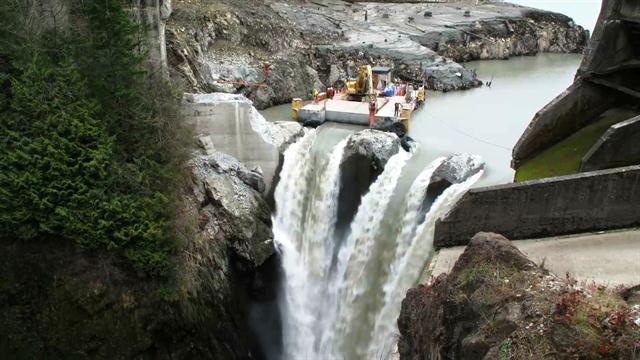
 Total since 1999:1025